
keyword title
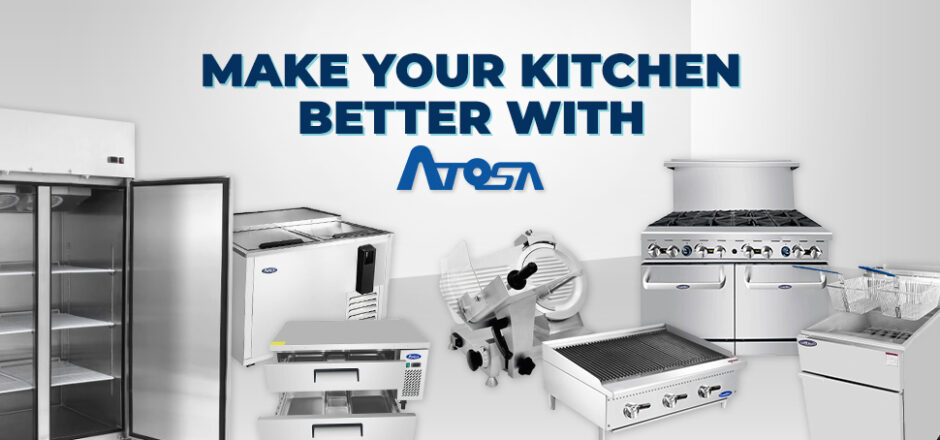
Atosa Repair & Installation California: Professional Technical Guide
Atosa has rapidly become a favorite in California’s commercial kitchens due to its robust “CookRite” gas line and high-efficiency refrigeration. Known for utilizing eco-friendly R290 refrigerants and heavy-duty 32,000 BTU burners, Atosa equipment is designed for high-volume performance. However, maintaining the strict temperature tolerances of their reach-ins or the precise pilot ignition of their ranges requires an advanced technical understanding. This guide serves as an authoritative resource for diagnosing and servicing Atosa equipment to factory specifications.
Professional Engineering Standards for Atosa CookRite Ranges
Atosa gas ranges, particularly the AGR series, are built with heavy-duty cast iron grates and high-output burners that deliver consistent heat. A primary focus for any technician is the standing pilot system and the manifold pressure regulation. When a burner exhibits “yellow tipping” or a weak flame, it usually indicates a disruption in the primary air-to-gas ratio or a partially clogged orifice.
California safety protocols demand that any service involving gas pressure regulation or internal manifold work be performed by a licensed professional. You can verify technical standing through the DCA. In California kitchens, working on high-BTU equipment requires strict adherence to ventilation codes. While residential brands like GE Appliances are common, the semi-commercial nature of Atosa requires a technician who understands gas orifice sizing for both Natural Gas and Liquid Propane (LP) conversions.
The Science of R290 Refrigeration and Digital Logic
Atosa’s refrigeration units, including reach-ins and prep tables, are leaders in utilizing Hydrocarbon (HC) refrigerants like R290. These systems are highly efficient but require specialized handling due to their flammable nature.
While nationwide platforms like Sears Home Services provide broad repair support, the specific digital controllers used in Atosa units—often featuring automatic defrost cycles and precise LED temperature displays—require exact sensor calibration. If a reach-in fails to maintain the NAFEM-standard 33°F to 45°F range, a technical diagnostic must prioritize the evaporator fan motor and the integrity of the door gaskets.
Common Failure Points in Atosa Systems
| Component | Technical Function | Failure Symptom |
| R290 Compressor | High-efficiency thermal exchange | Unit not cooling or tripping breaker |
| Digital Controller | Manages defrost and temp logic | P1/P2 error codes or frozen evaporator |
| Snap-in Gasket | Maintains hermetic seal | Condensation around door or rapid temp loss |
| Thermocouple | Flame-sensing safety circuit | Oven pilot won’t stay lit after knob release |
According to EPA standards, all refrigerant work on commercial systems must be conducted by Section 608 Technician Certification holders. This is a non-negotiable safety requirement for any business operating within the California jurisdiction.
Diagnostic Procedures for Atosa Commercial Equipment
Atosa equipment is designed for easy maintenance, but electronic nuances can occur. If a unit is underperforming, the technician must check the digital controller’s probe resistance. Often, large-scale aggregators like HomeAdvisor or Thumbtack list general handymen who may miss the subtle “short-to-ground” issues in the water control relay of an ice machine.
-
Step 1: Verify power at the outlet; many commercial failures are traced back to tripped GFCI breakers.
-
Step 2: Clean the condenser coils; Atosa units are sensitive to dust-related head pressure spikes.
-
Step 3: Test the start relay and capacitor if the compressor “clicks” but fails to start.
-
Step 4: Calibrate the thermostat for oven accuracy between 175°F and 550°F.
For a broader perspective on the evolution of commercial kitchen standards, the Wikipedia page on Professional Ranges provides a detailed look at how high-output tech has revolutionized modern food service.
Component Integrity and Supply Chain Authority
The reliability of an Atosa repair is intrinsically linked to the quality of the parts installed. While you can find generic accessories at retailers like The Home Depot, Lowe’s, Target, and Best Buy, critical mechanical parts such as Atosa fan motors, control boards, and specific gas valves should be sourced through verified distributors like Encompass or Sears PartsDirect. Using non-OEM components can compromise the safety features of high-heat cooking appliances.
California Compliance and Licensing Requirements
In California, appliance service is governed by strict licensing laws to protect property and public safety. At MDTECH SERVICES, we operate as a core professional developer in the repair industry, fully bonded and insured to work on both high-pressure gas and industrial electrical systems throughout the state.
Major repairs must be executed in accordance with CSLB guidelines. Choosing an unverified provider in California can lead to insurance claim denials and potential safety hazards. We adhere to the Bureau of Household Goods and Services standards to ensure every Atosa unit we service meets or exceeds state regulations.
People Also Ask (Technical FAQ)
Why is my Atosa refrigerator showing a “HA” error code?
A “HA” code is a high-temperature alarm. It indicates the cabinet has risen above the safe threshold. This is often caused by a dirty condenser, an overloaded cabinet, or a door left ajar in a high-humidity California environment.
Atosa burners feature a lift-off design. You should clear the ports with a small wire to ensure a blue flame. If the flame is yellow or lifting, contact a professional to adjust the air-shutter.
Are Atosa appliances covered by home warranties like Liberty Home Guard?
While Liberty Home Guard and similar services cover many brands, they often require specialized technicians for commercial-grade brands like Atosa due to the R290 safety protocols and high-amperage electrical requirements.
Professional Service Throughout California
When a technical failure occurs, the speed and accuracy of the diagnosis determine the downtime of your kitchen. At MDTECH SERVICES, we specialize in the unique engineering of Atosa USA products. We serve the entire California region with a deep inventory of factory-spec parts. While general networks like Mr. Appliance offer broad support, our focus is on the specific mechanical nuances of the Atosa brand.
For immediate assistance, visit our Google Maps Location to verify our service headquarters and available technicians in your area.
Why Technical Expertise Matters
Atosa units are built for high-performance durability. They require a technician who understands the thermodynamics of R290 cooling and the electrical logic of “CookRite” systems. By choosing a service provider that functions as a core professional developer in the technical space, you ensure your investment is protected across California.
For more information, visit our official site at MDTECH SERVICES. We provide transparent diagnostics, documented repair logs, and a commitment to the highest California service standards. Our team maintains NATE Certification level workmanship, ensuring that every Atosa system is restored to its peak factory performance.
Contact Information:
-
Business Name: MDTECH SERVICES
-
Address: Lake Forest CA, 92630, USA
-
Email: dispatch1@md-techusa.com
-
Phone: 310-871-0323

Book Your Appointment
310-871-0323
Air Conditioning Repair in California
Appliances Installation Services
- Appliance Installation in Orange County
- Appliance Installation services
- Appliance Installation service in California
- Appliance Installation specialists
- Bake Installation
- Beverage Center Installation
- Blower Installation
- Combo Microwave Oven Installation
- Cooktop Installation
- Dishwasher installation
- Double Oven Installation
- Dryer installation
- Duct Installation
- Fan Installation
- Freezer Installation
- Gas range Installation
- Hood Installation
- Icemaker Installation
- Ignitor Installation
- Kitchen Appliance Installation
- Microwave Installation
- Oven Installation
- Refrigerator Installation
- Single Oven Installation
- Sears Appliance installation
- Stackable Washer Dryer Installation
- Stove Installation
- Trash Compactor installation
- Vent Installation
- Washer Dryer installation
- Washer Installation
- Washing machine Installation
- Wine Cooler installation
Appliances Repair Services
- Appliance Repair
- Appliance repair in Orange County
- Appliance Repair services
- Appliance repair service in California
- Appliance repair specialists
- Bake repair
- Blower repair
- Beverage Center repair
- Combo Microwave Oven repair
- Cooktop repair
- Dishwasher repair
- Double Oven repair
- Dryer Repair
- Duct repair
- Fan repair
- Freezer Repair
- Gas range repair
- Hood repair
- Icemaker repair
- Ignitor repair
- Kitchen Appliance Repair
- Microwave Repair
- Oven Repair
- Refrigerator Repair
- Sears Appliance repair
- Single Oven repair
- Stackable Washer Dryer Repair
- Stove repair
- Trash Compactor repair
- Vent repair
- Washer Dryer repair
- Washer Repair
- Washing machine repair
- Wine Cooler repair
LP Propane Conversion Installation & Repair Services
- Conversion from LP to Natural Gas
- Conversion from LP to Natural Gas Installation
- Cooktop LP Conversion From Natural Gas
- Cooktop LP Conversion Installation
- Dryer LP Conversion From Natural Gas
- Dryer LP Conversion Installation
- LP Conversion from Natural Gas
- LP Conversion from Natural Gas Installation
- Oven LP Conversion From Natural Gas
- Oven LP Conversion Installation
- Stove LP Conversion From Natural Gas
Plumbing Installation & Repair Service
- Air Gap Installation
- Air Gap Repair
- Drain Hose Installation
- Drain Hose Repair
- Drainage Installation
- Drainage Repair
- Faucet Installation
- Faucet Repair
- Garbage Disposal Installation
- Garbage Disposal Repair
- Sink Installation
- Sink Repair & Installation
- Soap Dispenser Installation
- Soap Dispenser Repair
- Water Hose Installation
- Water Hose Repair