
Most american households depend on their appliances running smoothly for daily comfort and efficiency. Yet, even small installation mistakes can cause major headaches, wasted energy, or even safety risks. Surprisingly, nearly 40 percent of home appliance issues are linked to improper setup or installation. With the right know-how, you can sidestep common pitfalls and keep your home running safely. This guide walks you through each step, so you can handle your next appliance installation with clarity and confidence.
Table of Contents
- Step 1: Assess Your Installation Area
- Step 2: Gather Essential Tools And Materials
- Step 3: Disconnect Old Appliances Safely
- Step 4: Install And Secure Your New Appliance
- Step 5: Connect Utilities And Test Functions
- Step 6: Confirm Proper Operation And Safety
Quick Summary
| Important Insight | Detailed Explanation |
|---|---|
| 1. Assess Installation Area First | Measure dimensions, check ventilation, and ensure safe proximity to utilities. |
| 2. Gather Essential Tools | Collect tools like a tape measure, wrenches, and safety gear to streamline installation. |
| 3. Safely Disconnect Old Appliances | Turn off power, shut off gas, and consult professionals if unsure about disconnections. |
| 4. Follow Manufacturer Installation Guidelines | Carefully position and secure your appliance, ensuring all connections meet safety standards. |
| 5. Conduct Thorough Testing | Test appliance performance and safety indicators to verify proper functionality before full use. |
Step 1: Assess your installation area
Before bringing any appliance into your home, you need a strategic plan for placement that ensures safety, efficiency, and optimal performance. Assessing your installation area is more than just measuring square footage. According to Energy.gov, a thorough home assessment involves evaluating multiple critical factors that impact both appliance functionality and household safety.
Start by measuring the precise dimensions of your designated installation space, accounting for ventilation requirements and clearance needs. The Building America Solution Center recommends carefully examining combustion air openings and understanding how factors like louvers and grilles can influence appliance operation. Pay special attention to proximity to electrical outlets, gas lines, and potential obstructions that might interfere with proper installation.
Pro tip: Always leave at least 2-3 inches of clearance around all sides of the appliance for proper air circulation and potential maintenance access. This extra space prevents overheating and allows technicians easier service routes if repairs become necessary. Once you have a comprehensive understanding of your installation area, you will be ready to move forward with confidence and precision.
Step 2: Gather essential tools and materials
Preparing for a successful appliance installation requires more than just enthusiasm. You need the right tools and materials to ensure a smooth and safe setup. Consumer Reports recommends approaching tool selection strategically to enhance efficiency and minimize potential complications during the installation process.
First, collect your core toolkit. Essential items include a sturdy tape measure, adjustable wrench, screwdriver set with multiple head types, level, electrical tester, pipe wrench, and protective gear like work gloves and safety glasses. Given the electrical considerations of most appliance installations, InterNACHI emphasizes the importance of having a reliable electrical multimeter to verify outlet compatibility and ensure proper voltage requirements are met before connecting any new appliance.
Pro tip: Create a dedicated workspace with good lighting and clear surfaces before organizing your tools. Group your tools by category (measuring, tightening, testing) to streamline your installation process. Having everything prepared in advance will help you work efficiently and reduce the likelihood of interruptions or forgotten equipment.
 With your tools assembled and ready, you are now set to move forward with confidence in your installation project.
Step 3: Disconnect old appliances safely
Disconnecting an old appliance requires more than just unplugging and pulling it away from its spot. Safety must be your top priority during this critical transition process. According to IAEI Magazine, strict safety standards outlined in NEC Article 422 govern how electrical appliances should be properly disconnected to protect both homeowners and equipment.
InterNACHI emphasizes the importance of understanding your specific appliance’s unique disconnection requirements. Start by turning off the primary power source at your circuit breaker panel to eliminate any electrical risk. For gas appliances, shut off the gas supply valve completely. Carefully unplug the appliance or disconnect hardwired connections using appropriate tools. If you’re uncertain about any electrical or gas connections, it’s best to consult a professional technician who can safely manage the disconnection process.
Pro tip: Always wear protective work gloves and safety glasses during disconnection. Take photos of existing connections before removal to help you reference proper reinstallation later. With the old appliance safely disconnected, you are now prepared to move forward with your installation project. For more detailed guidance, check out our guide on appliance repair safety to ensure a smooth and secure transition.
Step 4: Install and secure your new appliance
Installing a new appliance requires precision and careful attention to detail. This critical phase transforms your preparation into a functional setup that ensures safety and optimal performance. Electronic Code of Federal Regulations emphasizes the importance of following manufacturer instructions meticulously during installation to prevent potential displacement and safety risks.
InterNACHI provides comprehensive guidance on mechanical appliance placement. Begin by carefully positioning your appliance in the predetermined location, ensuring proper alignment with existing connections. For electrical appliances, verify that the outlet matches the appliance’s voltage requirements. When connecting gas lines, use appropriate fittings and check for any potential leaks. Carefully slide the appliance into place, maintaining the recommended clearance on all sides to allow for proper ventilation and potential future maintenance.
Pro tip: Use a level to confirm the appliance sits perfectly flat, which prevents uneven wear and potential operational issues. Secure the appliance using manufacturer recommended mounting brackets or stabilization methods. For added safety, take a moment to test all connections before considering the installation complete.
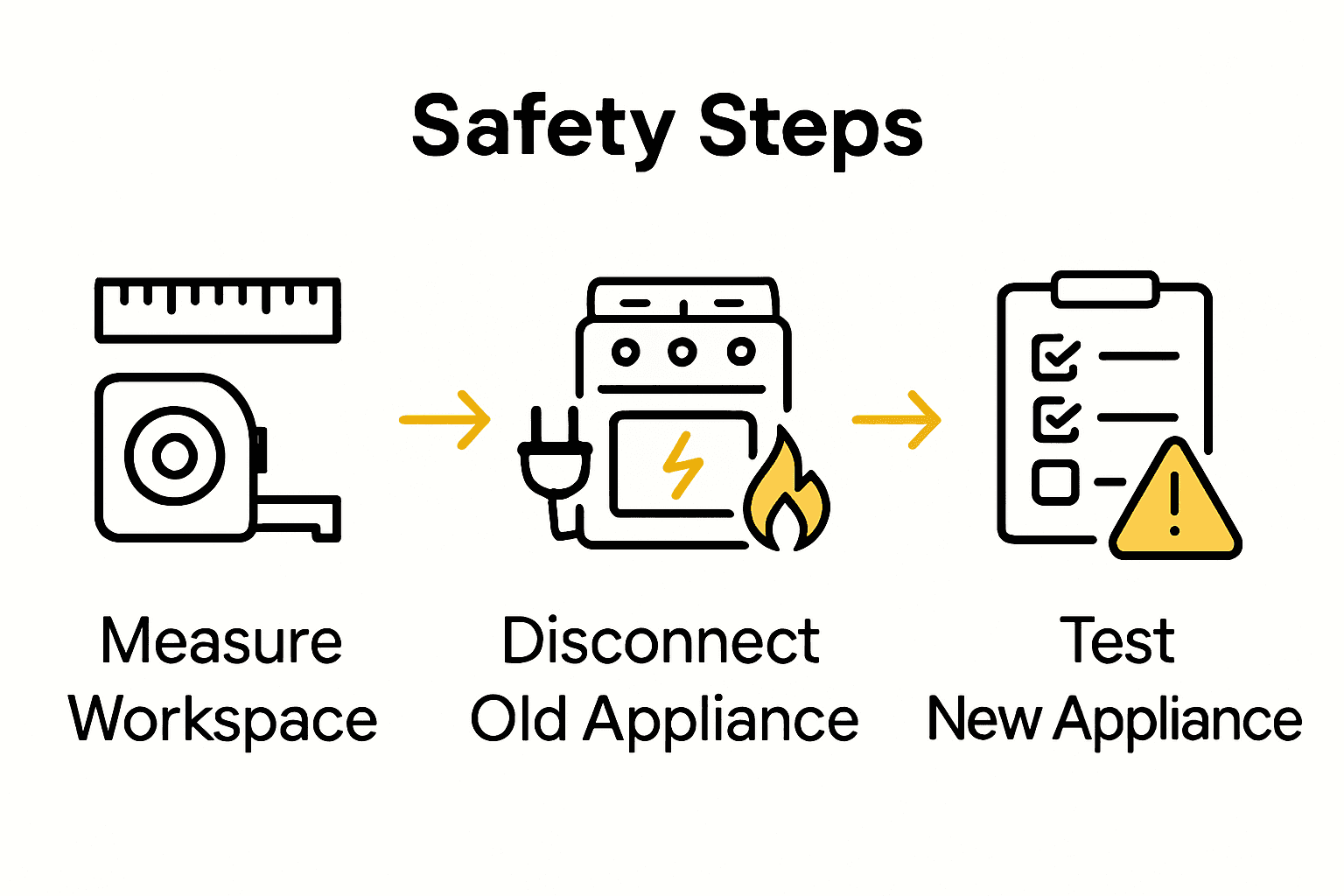 Want more detailed insights? Check out our how to repair appliances guide for additional professional tips and troubleshooting advice.
Step 5: Connect utilities and test functions
Connecting utilities and thoroughly testing your newly installed appliance represents the final critical stage of your installation process. ENERGY STAR emphasizes the importance of systematic testing to ensure optimal performance and energy efficiency during utility connections.
U.S. Department of Energy recommends a comprehensive approach to utility connections. Begin by carefully reconnecting electrical or gas lines according to manufacturer specifications. For electrical appliances, verify proper grounding and voltage compatibility. If connecting a gas appliance, use approved fittings and check thoroughly for any potential leaks using a specialized gas detector. Run a complete functional test through each of the appliance’s primary settings and modes, listening for unusual sounds and observing performance characteristics.
Pro tip: Keep your manufacturer’s manual nearby during testing and document any unexpected behaviors or performance issues. A methodical approach helps identify potential problems early. Perform multiple test cycles to confirm consistent performance across different settings. Want more detailed guidance? Check out our how to repair appliances homeowner guide for additional professional insights into appliance functionality and maintenance.
Step 6: Confirm proper operation and safety
The final stage of your appliance installation involves a meticulous safety verification process that protects both your investment and your household. U.S. Department of Energy provides comprehensive guidelines for conducting thorough combustion safety testing, emphasizing the critical nature of verifying appliance performance and potential risk factors.
Energy.gov recommends a systematic approach to safety confirmation. Begin by running the appliance through multiple operational cycles, carefully monitoring performance indicators such as temperature regulation, electrical draw, and mechanical sound patterns. Check for any unusual vibrations, unexpected noises, or performance inconsistencies that might signal underlying installation issues. Pay special attention to ventilation pathways, ensuring that combustion appliances have proper air circulation and that electrical connections remain secure throughout operational testing.
Pro tip: Document your safety verification process with timestamped notes and photographs. This creates a valuable record for future maintenance and can help diagnose potential issues down the line. If you notice any concerning performance characteristics or safety anomalies, do not hesitate to contact a professional technician. Need additional guidance? Review our how to choose appliance repair service guide for expert insights into maintaining your newly installed appliance.
Ensure a Safe and Flawless Appliance Installation with Expert Assistance
Installing a new appliance involves many detailed steps like assessing your space, disconnecting old units safely, and testing utilities to guarantee both safety and performance. These tasks can feel overwhelming especially when you want to avoid costly mistakes or safety risks such as improper ventilation or electrical hazards. If you need reliable guidance or professional help, MDTech Services specializes in expert residential appliance installation and repair in Orange and Los Angeles Counties.

Trust a team that understands the critical nature of precise installation and safety verification. From appliance conversions to thorough testing and securing connections, our licensed technicians provide responsive, reliable service focused on your peace of mind. Act now to avoid potential risks and ensure your new appliance works perfectly by scheduling your appointment online today at MDTech Services. Take the first step toward a safer home with professionals who prioritize quality and safety in every installation.
Frequently Asked Questions
How do I assess my installation area for a new appliance?
To assess your installation area, start by measuring the space’s dimensions and accounting for ventilation and clearance needs. Make sure to leave 2-3 inches of clearance around the appliance for air circulation and maintenance access.
What tools do I need to gather for a safe appliance installation?
Essential tools for appliance installation include a tape measure, adjustable wrench, various screwdrivers, a level, electrical tester, pipe wrench, and protective gear like gloves and safety glasses. Organize these tools in a well-lit workspace to streamline your installation process.
How do I safely disconnect an old appliance?
To safely disconnect an old appliance, ensure you turn off the primary power at the circuit breaker and shut off the gas supply valve if applicable. Use appropriate tools to unplug or disconnect the appliance, and consult a professional if you encounter any uncertainties.
What steps should I take to install and secure a new appliance?
Begin by positioning the new appliance in the predetermined location and verify the connections for alignment. Ensure it is level and secure it according to the manufacturer’s recommendations, allowing for proper ventilation on all sides.
How do I connect utilities and test the functions of my new appliance?
Reconnect the electrical or gas lines as per the manufacturer’s specifications, ensuring proper grounding and leak checks. After completing the connections, run a functional test across all settings to confirm optimal performance.
What should I do to confirm the proper operation and safety of my appliance after installation?
Run the appliance through multiple cycles, observing performance factors like temperature and sounds. Document your observations, and if you notice any issues, consult a professional technician for assistance.