
A professional washing machine installation typically runs $100 to $500 when your hookups already exist, and $650 to $2,500 when you need new plumbing, gas lines, or electrical work. Expect the higher end whenever the job includes a new 240V circuit, a laundry relocation, or a gas dryer conversion. Always get an on-site quote. Photos help, but nothing replaces a technician actually looking at your setup.
TL;DR:
- Costs vary significantly depending on whether existing hookups are used or new plumbing, gas, and electrical work are required, with jobs involving new lines often exceeding $1,000.
- Simple installations mainly include labor costs between $75 and $150, while more complex setups with permits and additional materials can increase total expenses.
- Regional labor rates, home age, washer type, and installation location heavily influence the final price, especially for high-risk or hard-to-access sites.
- Licensed tradespeople are necessary for work involving plumbing, gas, or electrical systems, and permits are usually required for anything beyond a basic swap.
- Getting an itemized quote that clearly breaks down labor, materials, permits, and haul-away helps prevent unexpected costs or change orders during installation.
Table of Contents
- How Much Does Washing Machine Installation Cost, Line by Line?
- What Makes Washer Installation Cost More or Less?
- Who Installs a Washing Machine: Plumber, Electrician, or Handyman?
- Do You Need a Permit to Install a Washing Machine?
- How to Get an Accurate Washing Machine Installation Quote
- What MDTech Technicians See on the Job
- A Note on Pricing and Booking
- Book a Washing Machine Installation With MDTech Services
- Where These Cost Estimates Come From
- Sources
How Much Does Washing Machine Installation Cost, Line by Line?
Quotes vary because “installation” covers a wide range of actual work, from quick swaps to full-day projects requiring multiple trades. Breaking the price into line items helps you see exactly what you’re paying for and where a quote might be cutting corners.
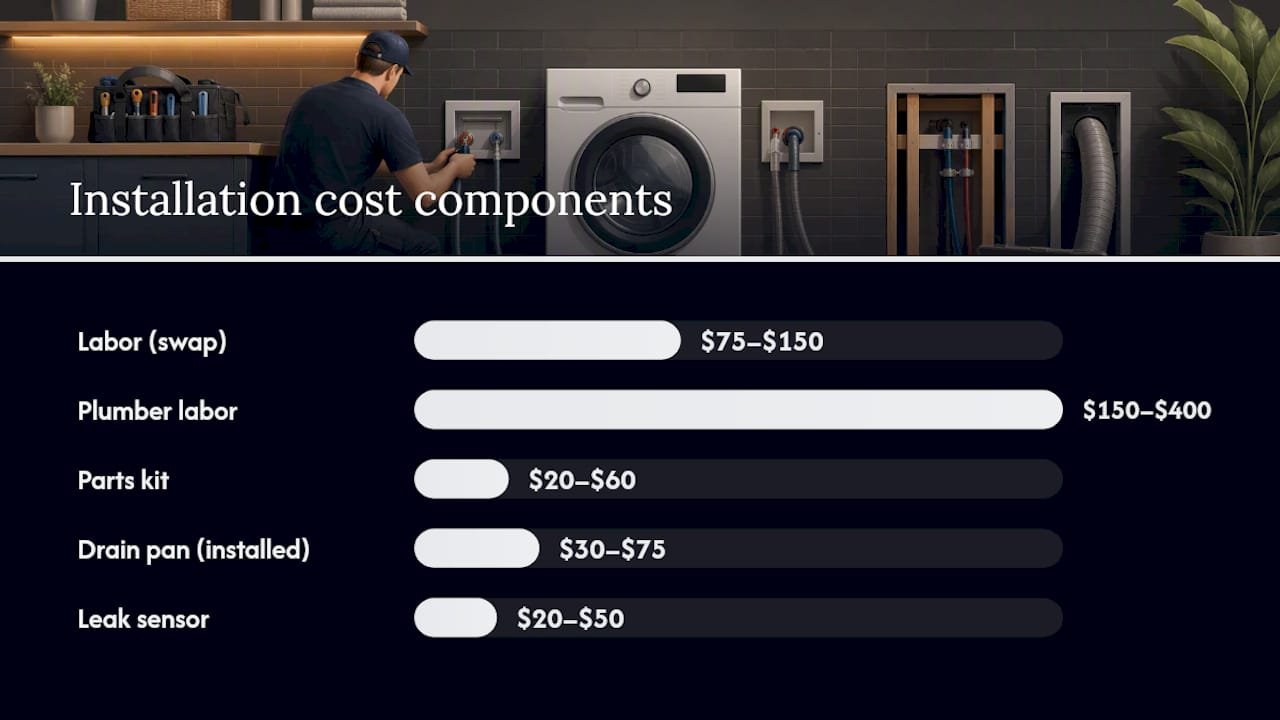
Labor is the biggest line on a simple job. A straightforward swap where hookups already exist and are in good shape commonly costs $75 to $150 if you hire a handyman or general appliance tech. Bring in a licensed plumber for new supply lines or drain work, and that portion alone adds another $150 to $400.
Materials matter more than most homeowners expect. A basic parts kit covering supply hoses, a drain hose, and a fill filter runs $20 to $60. Add a floor drain pan (recommended, sometimes required by code on upper floors) and you’re looking at another $30 to $75 installed. Leak-detection sensors, which installers increasingly recommend for second-floor laundry rooms, add $20 to $50 more but can save you a five-figure water damage claim.
Permits apply when the job touches plumbing rough-ins, gas lines, or new electrical circuits. Expect $150 to $300 in permit fees in most jurisdictions, on top of labor and materials.
Haul-away of your old unit typically adds $25 to $75 if the installer offers it, which beats renting a truck yourself.
Here’s how those line items stack up across three real-world scenarios:
- Simple like-for-like swap. Existing hookups, good condition, same footprint. Total cost: $100 to $300, done in well under two hours.
- Swap plus new valves, drain pan, and haul-away. Aging shutoff valves get replaced, a drain pan goes in, old unit hauled off. Total: $250 to $500 or more.
- Full relocation or brand-new hookups. New plumbing rough-in, possibly a new 240V outlet or gas line, drywall or flooring work. Total: often north of $1,000, and can approach the $2,500 high end reported for full washer and dryer hookup installations.
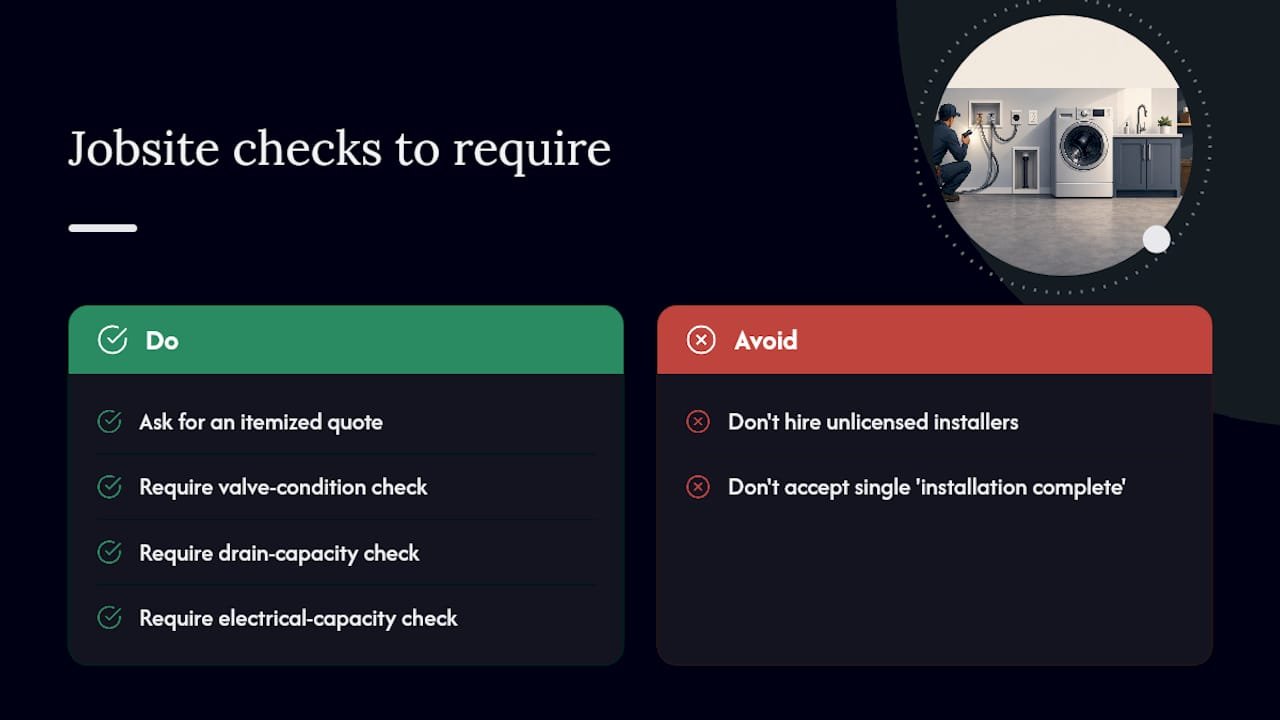
When you’re comparing quotes, check that each one lists labor, materials, permit fees (if applicable), and haul-away separately. A single lump-sum number without a breakdown is the easiest way to get blindsided by a change order mid-job. If shutoff valves, a drain trap, or proper venting aren’t mentioned anywhere, ask why. Technicians frequently find these items missing from consumer quotes, and adding them after the fact rarely comes at the original price.
What Makes Washer Installation Cost More or Less?
Your final bill depends on four things: the type of washer, where it’s going, the age of your home, and local labor rates.
Washer type changes the install itself. Top-load units are usually the simplest and cheapest to connect. Front-load washers need careful leveling and sometimes a different drain configuration. Stackable and combo washer-dryer units add complexity, since they often require dedicated venting or a condensate line if they’re ventless, plus more precise electrical planning.
Location inside your home matters just as much as the unit. A garage installation with an existing floor drain is usually the cheapest scenario. Second-floor laundry rooms add cost because installers recommend a drain pan and leak sensor given the higher risk of water damage below. Basement installs sometimes require a condensate pump if there’s no gravity drain nearby.
Home age is the wildcard. Older homes frequently hide problems that don’t show up until a technician opens the wall or shuts a valve. Corroded shutoff valves, undersized drain lines, and electrical panels without spare capacity are the three most common surprises, and each one adds real dollars to the original estimate.
Labor rates vary by region. Bureau of Labor Statistics wage data shows meaningful differences in plumber and electrician hourly rates from one metro area to another, which is a big reason the same installation can cost noticeably more in one city than another.
A few quick factors that push cost up or down:
- Older galvanized or corroded plumbing raises labor time and often requires valve replacement.
- Electrical panels at or near capacity may need an upgrade before a new 240V circuit can go in.
- Tight access (behind cabinetry, in a closet) adds labor time regardless of washer type.
- Permit fee bands differ by city, generally landing in that $150 to $300 range for plumbing or electrical work tied to the install.
Who Installs a Washing Machine: Plumber, Electrician, or Handyman?
The right pro depends on what your project actually needs, not just what “installation” sounds like it should cost.
- Appliance installer or handyman handles the straightforward stuff: connecting hoses to existing valves, leveling the unit, running the drain line into an existing standpipe or drain box.
- Licensed plumber steps in when you need new water supply lines, a new drain rough-in, or repairs to corroded or leaking valves. Water and drain integrity is squarely plumbing work, not a handyman task.
- Licensed electrician handles anything involving a new 240V circuit, panel capacity issues, or code-compliant wiring for an electric dryer pairing.
- Gas technician is required for gas dryer hookups or LP-to-natural-gas conversions, work that carries its own permitting and safety rules.
Pro Tip: Ask every pro for their license number and current insurance certificate before they start work, not after. A five-minute phone call to verify both can save you from liability if something goes wrong mid-installation.
Complex jobs often need more than one trade on the same visit. A coordinated site visit covering both plumbing and electrical needs catches interfacing issues that separate, disconnected quotes tend to miss.
Do You Need a Permit to Install a Washing Machine?
Most like-for-like swaps need no permit at all. Anything touching new plumbing rough-ins, gas lines, or new electrical circuits usually does, and skipping that step can create real insurance and resale problems later.
- Quick swap with existing hookups: typically under two hours, no permit, no inspection.
- New shutoff valves or drain pan added: same day, still usually no permit required.
- New plumbing rough-in or electrical circuit: several days to a week once you factor in permit approval and a scheduled inspection.
- Gas line work or full relocation: allow the most lead time, since gas permits often require a separate inspection before the line can be used.
Permit fees generally fall in the $150 to $300 range. Some contractors pull the permit as part of their service; others expect the homeowner to handle it. Confirm which one applies before work begins, and always check with your local permitting authority since rules and fees shift by city and county.
How to Get an Accurate Washing Machine Installation Quote
A little prep work turns three vague quotes into three numbers you can actually compare side by side.
Before the estimate, send:
- Photos of your current hookup area, including valves, drain, and outlet.
- The make and model of your new washer (top-load, front-load, stackable, gas or electric dryer pairing).
- Any known issues, like a slow drain or a valve that’s hard to turn.
On-site, a good technician should check:
- Condition of shutoff valves and supply lines.
- Drain box or standpipe height and capacity.
- Outlet type and amperage, especially for electric dryer pairings.
- Clearance behind and around the unit.
- Whether a floor pan is needed or required by local code.
Before you sign anything, ask these questions:
- Is a permit required for this job, and who pulls it?
- What’s included in the quoted price, and what would trigger a change order?
- Are you licensed and insured for this specific type of work?
- What warranty covers the labor and the parts you’re installing?
- What’s your payment schedule, and is a deposit required?
What MDTech Technicians See on the Job
After enough service calls, a few problems show up again and again. Corroded shutoff valves that won’t fully close. Drain lines that are undersized or partially clogged from years of lint and detergent buildup. Electrical panels sitting right at capacity, with no room for a new 240V circuit without an upgrade first.
These are exactly why licensed trades matter for anything beyond a basic swap. Gas line work and new circuits carry real safety risk, and insurance coverage on a botched job depends on the work being done to code by a licensed professional.
Pro Tip: Ask your installer for an itemized quote that lists valve condition, drain capacity, and electrical capacity as separate checked items, not a single “installation complete” line. That itemization is what protects you if something needs revisiting later.
A Note on Pricing and Booking
We quote every washing machine installation with an itemized breakdown before any work starts, because a homeowner deciding between $300 and $2,500 deserves to know exactly why. Our technicians are licensed for plumbing and electrical scope specific to appliance installs, and safety comes first on every gas or circuit job. Online booking is available, and every estimate starts with a real look at your setup, not a guess from a phone call.
— MDTECH
Book a Washing Machine Installation With MDTech Services
You can receive a fixed, itemized quote before any work begins, so you’re never guessing whether an estimate turns into a higher bill halfway through the job. Technicians handle the full range of installation scope, from a straightforward like-for-like swap to new plumbing, new 240V circuits, and gas line work, all under one licensed team instead of juggling separate trades yourself.
Booking online takes a few minutes. Have your washer’s make and model ready, along with a couple of photos of your current hookup area, and we’ll confirm what the on-site visit needs to check: valve condition, drain capacity, outlet type, and clearance. If your project turns out to need plumbing or electrical work beyond the basic connection, our team already covers that scope directly rather than sending you to find another contractor. Start with our washing machine installation page to see service details for Orange County and Los Angeles County, or head straight to washer installation booking to schedule your on-site estimate.
Where These Cost Estimates Come From
The price ranges in this guide draw from Angi’s cost data on washer and dryer hookups, HomeCostCalc’s installation cost calculator, Home Depot’s installation walkthrough, and Bureau of Labor Statistics wage data for regional labor rate context. Permit rules and fees vary by city and county, so confirm specifics with your local permitting office before budgeting for any job that involves new plumbing, gas, or electrical work.
Sources
- How Much Does It Cost to Install Washer and Dryer Hookups? 2026 Data
- Washing Machine Installation Cost Calculator (2026) — Free Online Estimate | HomeCostCalc
- How to Install a Washing Machine
- Can a Handyman Install a Washing Machine 2026 Guide
- Bureau of Labor Statistics – Occupational Employment and Wage Statistics