
Every homeowner in Orange or Los Angeles County knows the unsettling worry that comes with flickering lights or that unexpected spark from a kitchen appliance. Electrical grounding is more than just a technical buzzword—it’s a critical guard for your home and loved ones that connects your systems directly to the earth, channeling away dangerous current. This guide untangles common myths and dives into the real role of grounding so you can make safe, informed choices for every major appliance you own.
Table of Contents
- Electrical Grounding Defined And Common Myths
- Types Of Grounding In Household Appliances
- How Grounding Systems Protect Homeowners
- National And California Safety Regulations For Appliances
- Risks, Common Mistakes, And Prevention Tips
Key Takeaways
| Point | Details |
|---|---|
| Importance of Grounding | Electrical grounding is essential for protecting homes from electrical hazards and preventing potential accidents. |
| Types of Grounding | System grounding stabilizes voltage and provides a reference point, while equipment grounding protects appliances from faults. |
| Regulatory Standards | National and California electrical codes establish critical guidelines to ensure safety and compliance in electrical systems. |
| Prevention Strategies | Regular inspections and the use of certified equipment are crucial for maintaining effective grounding and electrical safety. |
Electrical grounding defined and common myths
Electrical grounding represents a critical safety mechanism that connects electrical systems directly to the earth, providing a safe pathway for excess electrical current. Proper grounding techniques protect homeowners from potential electrical hazards by stabilizing voltage and preventing dangerous electrical buildups.
At its core, electrical grounding involves creating a direct connection between electrical systems and the ground, which serves multiple essential safety functions:
- Limits voltage from lightning strikes
- Prevents electrical surges
- Stabilizes electrical system performance
- Protects sensitive electronic equipment
- Reduces risk of electrical shock
System grounding and equipment grounding are two distinct but interconnected concepts that work together to enhance electrical safety. Electrical circuits require both types of grounding to function safely and effectively.
Despite its importance, electrical grounding remains widely misunderstood. Common myths often confuse grounding with bonding, leading homeowners to make dangerous assumptions about their electrical systems. The reality is that grounding provides a reference point to earth, while bonding ensures conductive continuity between metal components.
Pro tip: Always consult a licensed electrician to verify your home’s grounding system and address any potential safety concerns.
Types of grounding in household appliances
Household appliances rely on two primary types of electrical grounding: system grounding and equipment grounding. Electrical safety standards define these critical approaches to protecting homeowners from potential electrical hazards.
System grounding involves connecting the neutral point of electrical power sources directly to the earth, serving several crucial functions:
- Stabilizes overall electrical system voltage
- Provides a reference point for electrical circuits
- Helps manage electrical current distribution
- Protects against power surges
- Facilitates proper circuit breaker and fuse operation
Equipment grounding, by contrast, focuses on connecting the metal components of electrical appliances to the ground. Grounding techniques in this category include several specific methods:
- Plate earthing
- Pipe earthing
- Rod earthing
- Wire mesh grounding
- Concrete encased electrode grounding
These grounding methods work together to create multiple layers of electrical safety. When an appliance experiences an electrical fault, the equipment grounding system provides a safe pathway for excess current, preventing potential electric shock and reducing fire risks.

Here’s a side-by-side look at system and equipment grounding roles:
| Aspect | System Grounding | Equipment Grounding |
|---|---|---|
| Primary Purpose | Stabilizes electrical system | Protects against equipment faults |
| Connection Point | Neutral point to earth | Metal appliance cases to earth |
| Main Failure Risk | Voltage instability | Electric shock or fire hazard |
| Typical Inspections | Utility provider checkups | Homeowner or electrician review |
Proper grounding is not optional – it’s a critical safety mechanism that protects both people and electrical equipment.
Pro tip: Regularly inspect your home’s grounding connections and consult a licensed electrician if you notice any signs of wear or damage.
How grounding systems protect homeowners
Grounding systems serve as a critical safety mechanism that prevents potentially fatal electrical accidents in residential settings. Electrical safety protocols provide homeowners with a comprehensive defense against electrical hazards by creating a safe pathway for excess electrical current.
The primary protective functions of grounding systems include:
- Diverting dangerous fault currents away from people
- Preventing electric shock risks
- Stabilizing electrical system voltage
- Protecting sensitive electronic equipment
- Triggering circuit breaker mechanisms during electrical faults
Fault current protection is perhaps the most critical safety feature of grounding systems. When an electrical malfunction occurs, such as damaged insulation or a wiring short, grounding mechanisms immediately redirect potentially lethal currents directly into the ground, preventing them from passing through human bodies.
Grounding is not just a technical requirement – it’s a life-saving electrical safety strategy that protects families from potentially fatal electrical accidents.
Modern homes rely on sophisticated grounding techniques that work seamlessly to detect and neutralize electrical risks before they can cause harm. These systems continuously monitor electrical flow, ensuring that any unexpected current is immediately diverted away from living spaces and occupants.
Pro tip: Schedule annual electrical inspections with a licensed professional to verify your home’s grounding system remains fully functional and meets current safety standards.
National and California safety regulations for appliances
National electrical standards provide comprehensive guidelines for appliance safety, with the National Electrical Code (NEC) serving as the primary framework for electrical system regulations across the United States. The NEC, specifically Article 250, establishes critical requirements for grounding and bonding electrical systems to protect consumers from potential electrical hazards.
Key national safety regulations for appliances include:
- Mandatory grounding of electrical systems
- Precise specifications for grounding electrode systems
- Requirements for equipment grounding conductors
- Standards for bonding metal components
- Protocols for preventing electrical shock
California electrical regulations take national standards a step further by implementing more stringent local requirements. California Electrical Code amendments address specific environmental conditions unique to the state, providing enhanced safety protocols for residential and commercial electrical systems.
California’s electrical safety standards represent the most advanced and comprehensive regulations in the United States, offering heightened protection for homeowners and businesses.
The primary differences between national and California regulations revolve around environmental adaptations, with California implementing more robust requirements for:
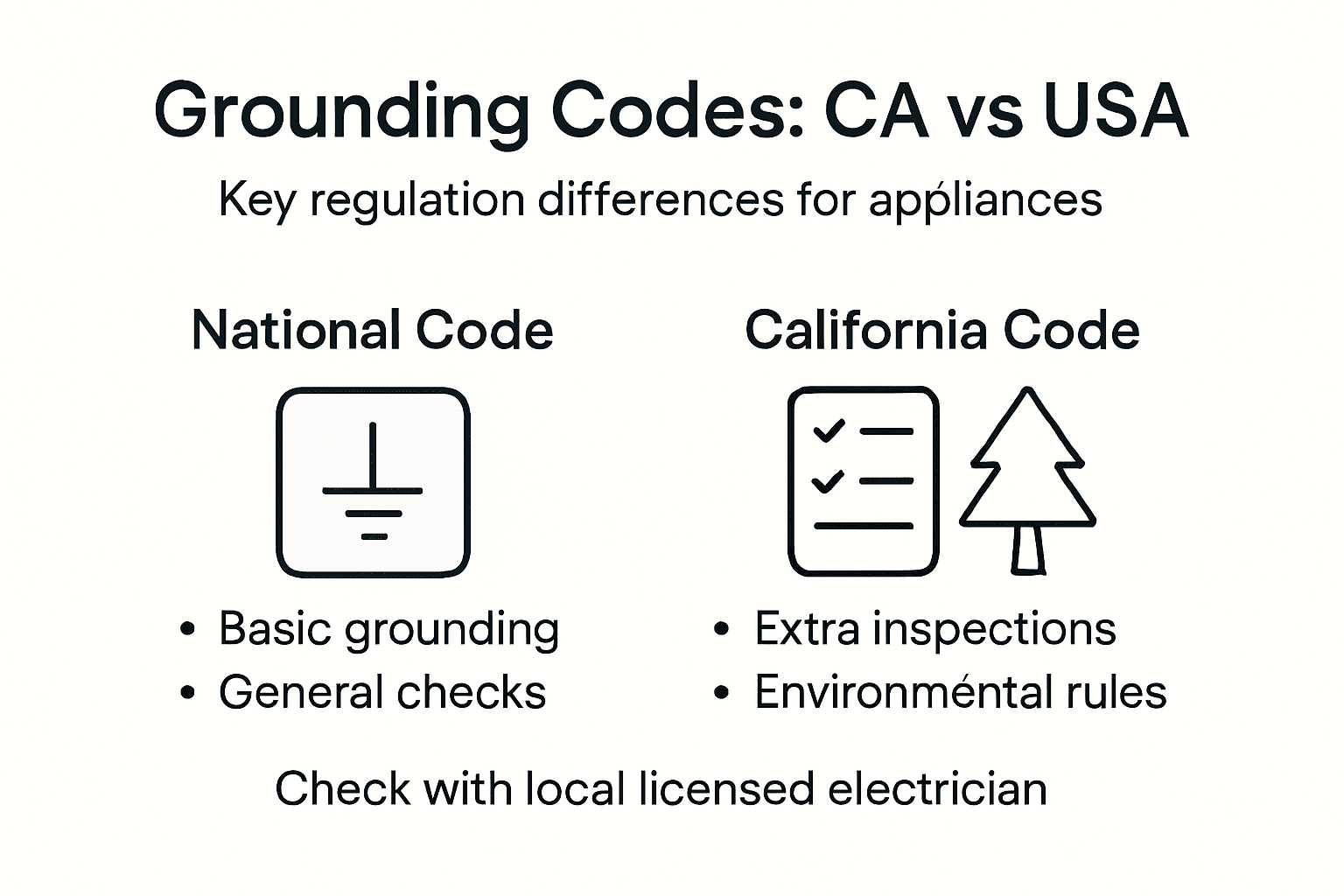
Compare how national and California code requirements differ:
| Regulation Area | National Electrical Code (NEC) | California Electrical Code |
|---|---|---|
| General Grounding | Standardized nationwide | Tailored for California’s climate |
| Earthquake Protections | Minimal or none | Mandatory for new installations |
| Corrosion Resistance | Basic guidelines | Enhanced anti-corrosion measures |
| Moisture and Humidity Standards | General requirements | Specific for coastal/high-humidity |
| Appliance Safety Mechanisms | Baseline protections | Additional layers for homes |
- Earthquake-resistant electrical installations
- Enhanced corrosion protection
- Stricter moisture and humidity standards
- More comprehensive grounding requirements
- Additional safety mechanisms for coastal and high-humidity regions
Pro tip: Consult a licensed electrician familiar with both national and California electrical codes to ensure your appliances meet all current safety standards.
Risks, common mistakes, and prevention tips
Electrical safety standards reveal numerous critical risks associated with improper grounding in household appliances. Understanding these potential hazards is essential for protecting your home and family from dangerous electrical incidents.
Common electrical grounding mistakes that significantly increase safety risks include:
- Inadequate ground-fault protection
- Missing or discontinuous grounding paths
- Using damaged electrical extension cords
- Improper equipment grounding
- Neglecting routine electrical inspections
Electrical hazards pose serious threats to homeowners, with potential consequences ranging from equipment damage to life-threatening electrocution. Grounding best practices emphasize the critical importance of maintaining proper electrical connections and understanding potential risks.
Proper grounding is not just a technical requirement – it’s a fundamental safety mechanism that protects your home and family from electrical dangers.
Prevention strategies for mitigating electrical grounding risks involve several key approaches:
- Conduct annual professional electrical inspections
- Replace damaged electrical cords immediately
- Use only listed and certified electrical equipment
- Ensure proper bonding of metal components
- Install ground-fault circuit interrupters (GFCIs)
Pro tip: Invest in a professional electrical safety audit to identify and address potential grounding issues before they become dangerous.
Ensure Your Home’s Electrical Grounding Is Safe and Reliable Today
Understanding the critical role of electrical grounding in protecting your home from electrical hazards is the first step toward peace of mind. Faulty grounding systems can lead to dangerous shocks, appliance damage, and even fire risks. At MDTech Services, we specialize in residential appliance repair and installation with a safety-first approach, ensuring your appliances and electrical connections meet both national and California electrical codes.

Don’t wait for an electrical problem to put your family at risk. Our licensed technicians provide expert inspections, repairs, and conversions that safeguard your home against grounding issues. Schedule your professional service now to keep your appliances operating safely and efficiently. Visit MDTech Services to book an appointment and learn how our reliable solutions can protect your home and loved ones.
Explore how we combine deep expertise with local knowledge to serve Orange County and Los Angeles County residents with trusted appliance repair and installation services that prioritize your safety at every step.
Frequently Asked Questions
What is electrical grounding and why is it important?
Electrical grounding is a safety mechanism that connects electrical systems to the earth, providing a safe pathway for excess electrical current. It is vital for preventing electrical shocks, stabilizing voltage, protecting sensitive equipment, and managing power surges.
What are the different types of grounding used in household appliances?
Household appliances typically use two types of grounding: system grounding, which stabilizes the overall electrical system, and equipment grounding, which connects the metal components of appliances to the ground to prevent electric shocks and reduce fire risks.
How do grounding systems protect homeowners from electrical hazards?
Grounding systems protect homeowners by diverting dangerous fault currents away from people, preventing electric shock, stabilizing electrical system voltage, and triggering circuit breaker mechanisms during faults, thus mitigating risks associated with electrical malfunctions.
What are common mistakes to avoid regarding electrical grounding?
Common mistakes include inadequate ground-fault protection, missing grounding paths, using damaged electrical cords, improper equipment grounding, and neglecting routine electrical inspections. Following grounding best practices is essential for safety.
Recommended
- 7 Essential Steps for an Effective Appliance Safety Checklist
- Reasons Your Appliance Won’t Start – Fast Fixes for Homeowners
- 7 Essential Appliance Safety Tips for Every Homeowner
- Step-by-Step Guide to Appliance Safety Inspections at Home
- Elektriskais Ūdens Sildītājs (Boilers) ARISTON ANDRIS RS 30/3 EU virs izlietnes 30L (3100339) – 35114
- 7 Essential Rental Property Maintenance Checklist Tips – Rental Income Insurance