
Sorting through heating and cooling repairs can leave many Orange and Los Angeles County homeowners feeling lost in a maze of technical jargon. Knowing the language of HVAC terminology gives you confidence to discuss your home’s systems with service technicians and spot the details that impact comfort, efficiency, and cost. By building a foundation of key definitions, you take control of decision-making around repair, replacement, and installation for reliable climate control year round.
Table of Contents
- Defining Essential HVAC Terms And Concepts
- Major Types Of Residential HVAC Systems
- Efficiency Ratings And Performance Features
- Safety Rules And California Legal Standards
- Cost Factors, Warranty Details, And Pitfalls
Key Takeaways
| Point | Details |
|---|---|
| Understanding HVAC Terminology | Familiarizing yourself with basic HVAC terms empowers homeowners to communicate effectively and make informed maintenance decisions. |
| Choosing the Right System | Selecting the appropriate HVAC system type based on your climate and home specifics is crucial for maximizing comfort and efficiency. |
| Evaluating Efficiency Ratings | Homeowners should prioritize HVAC systems with high SEER ratings to improve energy efficiency and reduce costs over time. |
| Cost Considerations | When evaluating HVAC systems, consider total lifecycle costs, including initial purchase, maintenance, and potential repair expenses. |
Defining Essential HVAC Terms and Concepts
Home heating and cooling systems might seem complex, but understanding basic HVAC terminology can help homeowners make smarter decisions about their comfort and energy efficiency. HVAC terminology encompasses a wide range of technical definitions that explain how your home’s comfort systems actually work.
HVAC, which stands for Heating, Ventilation, and Air Conditioning, represents the core systems responsible for maintaining comfortable indoor temperatures and air quality. These intricate systems involve several key components and processes that work together to regulate your home’s environment. Understanding these fundamental terms can empower you to communicate more effectively with technicians and make informed maintenance decisions.
Here are some essential HVAC terms every homeowner should know:
- BTU (British Thermal Unit): A measurement of heat energy that indicates how much thermal power an HVAC system can generate or remove
- SEER Rating (Seasonal Energy Efficiency Ratio): A metric that measures the cooling efficiency of air conditioning systems
- Refrigerant: The chemical compound circulating through your system that absorbs and releases heat
- Compressor: The heart of your air conditioning system that pressurizes and moves refrigerant
- Condenser: The outdoor unit that releases heat from your home during the cooling process
Modern HVAC systems involve complex interactions between mechanical components designed to provide consistent comfort. Homeowners who understand basic terminology can better assess their system’s performance, recognize potential issues, and communicate more effectively with service professionals.
Understanding HVAC terminology transforms mysterious mechanical systems into comprehensible home comfort solutions.
Pro tip: Ask your HVAC technician to explain any terms you don’t understand during your next service appointment.
Major Types of Residential HVAC Systems
Homeowners have several options when selecting HVAC systems, with each type offering unique benefits for home comfort and energy efficiency. Residential heating and cooling systems vary widely, designed to meet different climate needs and household requirements.

The most common residential HVAC systems include central air conditioning, heat pumps, furnaces, and ductless mini-split systems. Central air conditioning remains the most traditional approach, using a network of ducts to distribute cooled air throughout the home. Heat pumps offer versatility by providing both heating and cooling, making them an energy-efficient option for moderate climates.
Here are the primary residential HVAC system types:
- Split System Air Conditioners: Separate indoor and outdoor units connected by refrigerant lines
- Packaged HVAC Systems: All components contained in a single outdoor unit
- Ductless Mini-Split Systems: Individual room cooling without traditional ductwork
- Geothermal Heat Pumps: Underground system using earth’s constant temperature for heating and cooling
- Hybrid Heat Pump Systems: Combine electric heat pump with traditional gas furnace
Each system type comes with specific advantages and considerations. The right choice depends on factors like local climate, home size, energy efficiency goals, and budget. Homeowners should carefully evaluate their specific needs and consult with professional HVAC technicians to determine the most suitable system.
Here’s a quick reference comparing major residential HVAC system types and their ideal applications:
| System Type | Best For | Typical Efficiency | Space Requirement |
|---|---|---|---|
| Split System AC | Whole-home cooling | Moderate to high | Indoor & outdoor units |
| Packaged HVAC System | Small homes, rooftops | Moderate | Outdoor only |
| Ductless Mini-Split | Add-ons, older homes | High | No ductwork needed |
| Geothermal Heat Pump | Eco-friendly homes | Very high | Large yard needed |
| Hybrid Heat Pump System | Variable climates | High | Indoor & outdoor units |
Selecting the right HVAC system can dramatically improve home comfort and reduce energy costs.
Pro tip: Consider your local climate and home’s unique characteristics when selecting an HVAC system to maximize efficiency and comfort.
Efficiency Ratings and Performance Features
Understanding HVAC efficiency ratings is crucial for homeowners looking to make smart, cost-effective decisions about their heating and cooling systems. Minimum efficiency requirements help consumers evaluate the performance and energy consumption of different HVAC equipment.
The most important efficiency metrics homeowners should understand include SEER (Seasonal Energy Efficiency Ratio), EER (Energy Efficiency Ratio), and HSPF (Heating Seasonal Performance Factor). These ratings provide critical insights into how effectively an HVAC system converts electricity into cooling or heating power, directly impacting energy bills and environmental sustainability.
Key efficiency ratings and performance features to consider include:
- SEER Rating: Measures cooling efficiency over an entire season
- Higher numbers indicate more energy-efficient systems
- Modern systems typically range from 13 to 22 SEER
- EER Rating: Measures cooling efficiency at specific temperature conditions
- HSPF Rating: Evaluates heating efficiency for heat pump systems
- Energy Star Certification: Indicates top-tier energy performance
- BTU Capacity: Measures heating and cooling power output
Critical performance features go beyond simple efficiency ratings. Factors like variable-speed compressors, smart thermostat compatibility, and advanced filtration systems can significantly enhance overall system performance and home comfort.
Investing in a high-efficiency HVAC system can reduce energy costs by up to 30% annually.
Pro tip: Look for systems with SEER ratings of 16 or higher to maximize long-term energy savings and reduce environmental impact.
Safety Rules and California Legal Standards
California maintains stringent safety regulations for residential HVAC systems, designed to protect homeowners and ensure optimal system performance. Building Energy Efficiency Standards represent a comprehensive framework that governs HVAC installation, maintenance, and operational requirements throughout the state.
The California Energy Commission enforces detailed legal standards that impact residential HVAC systems. These regulations cover critical aspects such as equipment efficiency, installation protocols, ventilation requirements, and safety certifications. Homeowners must work with licensed technicians who understand and comply with these complex state-specific guidelines.
Key safety and legal requirements for California HVAC systems include:
- Permit Requirements: All HVAC installations and significant modifications need official building permits
- Energy Efficiency Compliance: Systems must meet Title 24 efficiency standards
- Professional Certification: Only licensed technicians can perform HVAC installations
- Safety Inspections: Mandatory inspections to verify system performance and safety
- Refrigerant Handling: Strict regulations on refrigerant management and disposal
The state’s commitment to energy efficiency and safety means homeowners must navigate a complex landscape of technical and legal requirements. Professional guidance becomes essential in understanding and implementing these comprehensive standards.
California’s HVAC regulations are among the most advanced in the United States, prioritizing both energy efficiency and residential safety.
Pro tip: Always request documentation proving your HVAC installation meets California’s Energy Commission Compliance standards.
Cost Factors, Warranty Details, and Pitfalls
Navigating the financial landscape of HVAC systems requires careful consideration of multiple cost factors beyond the initial purchase price. HVAC system cost estimation involves understanding the complex interplay between upfront expenses, long-term operational costs, and potential maintenance investments.
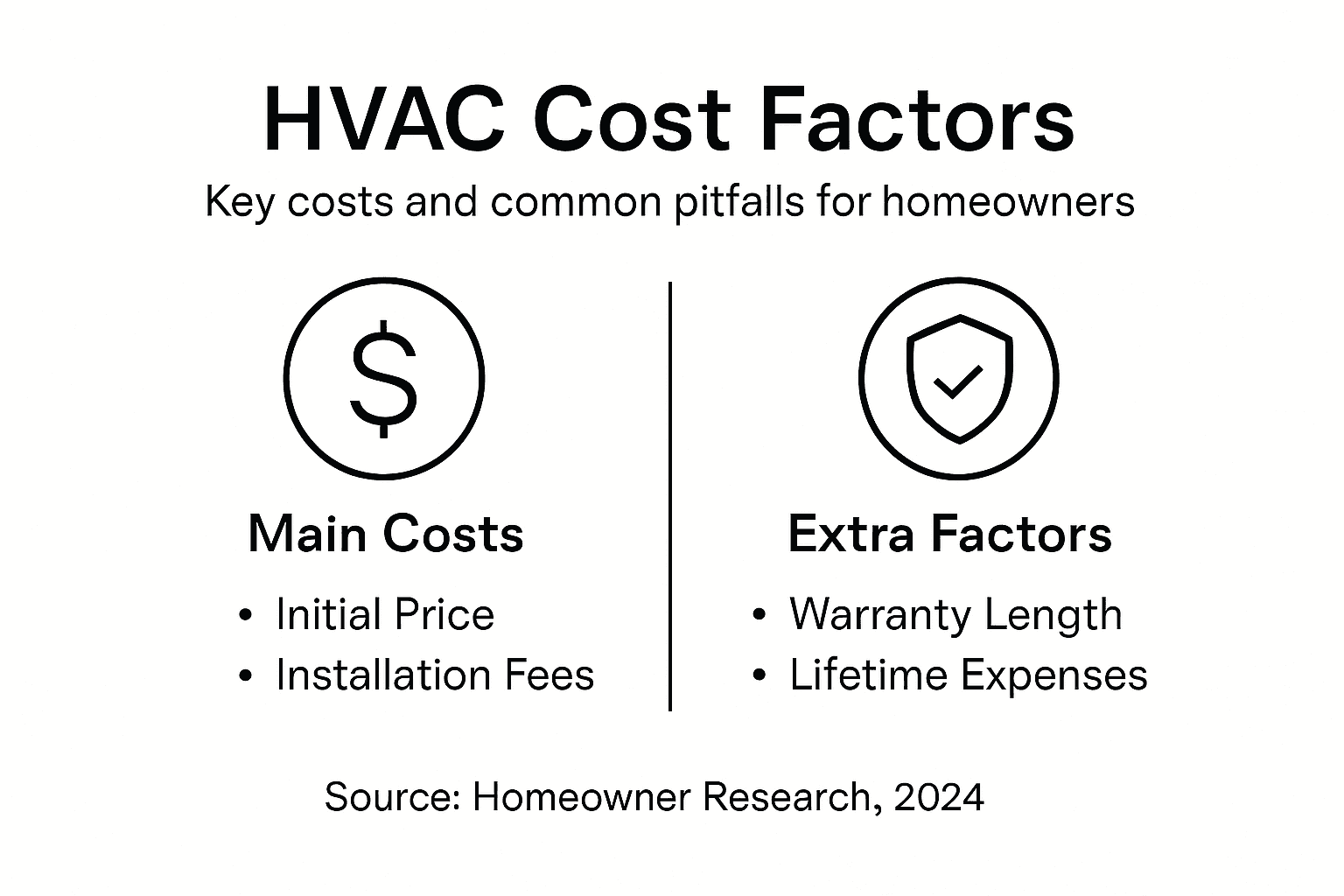
The total cost of an HVAC system encompasses several key components that homeowners must carefully evaluate. Installation costs can vary dramatically based on system complexity, home size, and existing infrastructure. Operational expenses represent ongoing financial commitments, including energy consumption, routine maintenance, and potential repair needs.
Key cost factors and potential pitfalls include:
- Initial Purchase Price: Ranges from $3,000 to $10,000 depending on system type
- Central air conditioning systems tend to be more expensive
- Ductless mini-split systems offer more flexible pricing
- Energy Efficiency Ratings: Higher SEER ratings typically mean higher upfront costs
- Warranty Coverage:
- Standard warranties range from 5-10 years
- Extended warranties can provide additional protection
- Maintenance Expenses:
- Annual professional maintenance costs: $150-$300
- Emergency repair potential: $500-$2,000 per incident
- Potential Hidden Costs:
- Ductwork modifications
- Electrical system upgrades
- Permit and inspection fees
Understanding warranty details becomes crucial in managing long-term HVAC system costs. Most manufacturers offer limited warranties that cover specific components, but homeowners must carefully review terms to avoid unexpected expenses.
This summary highlights common HVAC cost and warranty elements to consider during the buying process:
| Cost Element | Range or Duration | Common Mistake |
|---|---|---|
| Initial System Cost | $3,000 – $10,000 | Overlooking ductwork needs |
| Maintenance Annual | $150 – $300 | Skipping yearly checks |
| Warranty Length | 5 to 10 years | Not registering warranty |
| Emergency Repairs | $500 – $2,000 per call | Ignoring small issues early |
Investing in a high-quality HVAC system with comprehensive warranty protection can save thousands in potential repair costs.
Pro tip: Always compare total lifecycle costs, not just the initial purchase price, when selecting an HVAC system.
Unlock Home Comfort with Expert HVAC Services from MDTech Services
Understanding key HVAC terms like SEER rating and BTU capacity is essential for making smart home comfort decisions. Whether you are choosing a new system or maintaining your existing unit, knowing the right terminology helps you avoid costly mistakes and improve energy efficiency. MDTech Services is here to bridge the gap between technical knowledge and reliable, professional service right in Orange County and Los Angeles County.

Don’t let HVAC confusion affect your home’s comfort and safety. Trust our licensed technicians for expert repair, installation, and maintenance that fully comply with California’s strict standards. Ready to maximize efficiency and extend your HVAC system’s lifespan? Visit MDTech Services now to schedule your service. Learn how our team can support your smart home decisions with prompt, safety-focused solutions by exploring our HVAC repair and installation services today.
Frequently Asked Questions
What does HVAC stand for and what does it include?
HVAC stands for Heating, Ventilation, and Air Conditioning, which are the systems responsible for maintaining indoor temperature and air quality in homes.
What is the importance of understanding HVAC terminology?
Understanding HVAC terminology helps homeowners communicate effectively with technicians, assess system performance, recognize potential issues, and make informed maintenance decisions.
How do I choose the right HVAC system for my home?
Choosing the right HVAC system involves evaluating factors like local climate, home size, energy efficiency goals, and budget. Consulting with professional HVAC technicians is recommended for tailored advice.
What are common HVAC efficiency ratings and why are they important?
Common HVAC efficiency ratings include SEER (Seasonal Energy Efficiency Ratio), EER (Energy Efficiency Ratio), and HSPF (Heating Seasonal Performance Factor). These ratings indicate how effectively an HVAC system converts energy into heating or cooling power and can significantly affect energy bills.