
Experiencing inconsistent hot water is a frustration shared by thousands of American homeowners, especially across Orange and Los Angeles County. Quick recovery from chilly surprises is critical for families balancing busy routines and comfort. With more than 80% of unexpected cold shower complaints linked to water heater issues, understanding what repair actually involves can help you make smart decisions and avoid costly breakdowns.
Table of Contents
- What Water Heater Repair Actually Involves
- Different Types of Water Heaters Repaired
- How Licensed Technicians Diagnose Problems
- Common Repair Procedures And Safety Precautions
- Repair Costs, DIY Vs. Professional Service
- California Safety Codes And Legal Requirements
Key Takeaways
| Point | Details |
|---|---|
| Comprehensive Diagnostics are Essential | Professional technicians use detailed diagnostics to identify and resolve water heater issues, ensuring system performance and safety. |
| Specific Repair Needs per Heater Type | Different water heater types, such as tankless and solar, require specialized repair knowledge and techniques. |
| Safety Regulations are Critical | Adhering to California’s stringent safety codes and hiring licensed professionals is vital for safe water heater repairs. |
| Consider Professional Over DIY Repairs | While DIY can be tempting for minor issues, complex problems should always be managed by professionals to prevent risks and ensure compliance. |
What Water Heater Repair Actually Involves
Water heater repair is a complex process that goes beyond basic maintenance, involving detailed diagnostic and technical interventions to restore your home’s hot water system. At its core, repair requires understanding the intricate components and potential failure points within your water heating setup. Water heating involves heat transfer processes that can be disrupted by multiple mechanical and environmental factors.
The repair process typically encompasses several critical steps: comprehensive system diagnostics, identifying specific component failures, and implementing targeted solutions. Technicians will carefully examine key elements like heating elements, pressure relief valves, tanks, and connection points to determine the root cause of performance issues. Common problems include sediment buildup, rust and corrosion, pressure inconsistencies, and electrical or gas system malfunctions that can compromise your water heater’s efficiency and safety.
Depending on the specific issue, repair might involve replacing faulty components, cleaning sediment accumulation, adjusting pressure settings, or in more severe cases, recommending complete unit replacement. Prompt repair prevents water damage and potential safety hazards, making professional intervention crucial when you notice performance irregularities such as inconsistent water temperature, unusual noises, or visible leakage.
Pro tip: Always schedule professional water heater diagnostics annually to catch potential issues before they escalate into expensive, complex repairs.
Different Types of Water Heaters Repaired
Water heaters are sophisticated systems with diverse technologies, each requiring specialized repair approaches. Water heater types range from traditional storage models to advanced systems, presenting unique challenges for professional technicians. In California homes, the most common water heater varieties include storage tank units, tankless systems, heat pump models, and solar-powered configurations.
Storage tank water heaters, powered by gas, electricity, or propane, represent the most traditional repair scenario. These units feature large insulated tanks that store heated water and are prone to issues like sediment accumulation, corrosion, and heating element failures. Tankless water heaters, alternatively, provide on-demand hot water without storage, requiring precision repairs focused on their complex heat exchange mechanisms and electronic control systems.
Consumer repair guides highlight multiple water heater technologies that demand distinct diagnostic approaches. Hybrid heat pump water heaters, which leverage electricity to transfer heat efficiently, require specialized knowledge of both electrical systems and thermodynamic principles. Solar water heaters present another intricate repair challenge, involving solar panel connections, fluid circulation systems, and specialized heat transfer components that differ significantly from conventional heating methods.
Pro tip: Always confirm your technician’s specific expertise with the particular water heater type installed in your home before scheduling repairs.
Here’s a comparison of common water heater types and their unique repair considerations:
| Water Heater Type | Key Repair Challenges | Typical Power Source |
|---|---|---|
| Storage Tank | Sediment, corrosion, heating element | Gas, electric, propane |
| Tankless | Heat exchanger, electronics, sensors | Gas or electric |
| Heat Pump | Electrical, refrigerant components | Electricity |
| Solar | Panel connections, circulation system | Solar with electric/gas |
How Licensed Technicians Diagnose Problems
Licensed technicians employ a systematic and comprehensive approach to water heater diagnostics, ensuring precise identification of underlying issues. Professional water system diagnostic procedures involve multiple strategic assessment techniques designed to pinpoint exact malfunction sources. These professionals begin with thorough visual inspections, checking critical components for signs of wear, corrosion, or potential failure points that could compromise system performance.
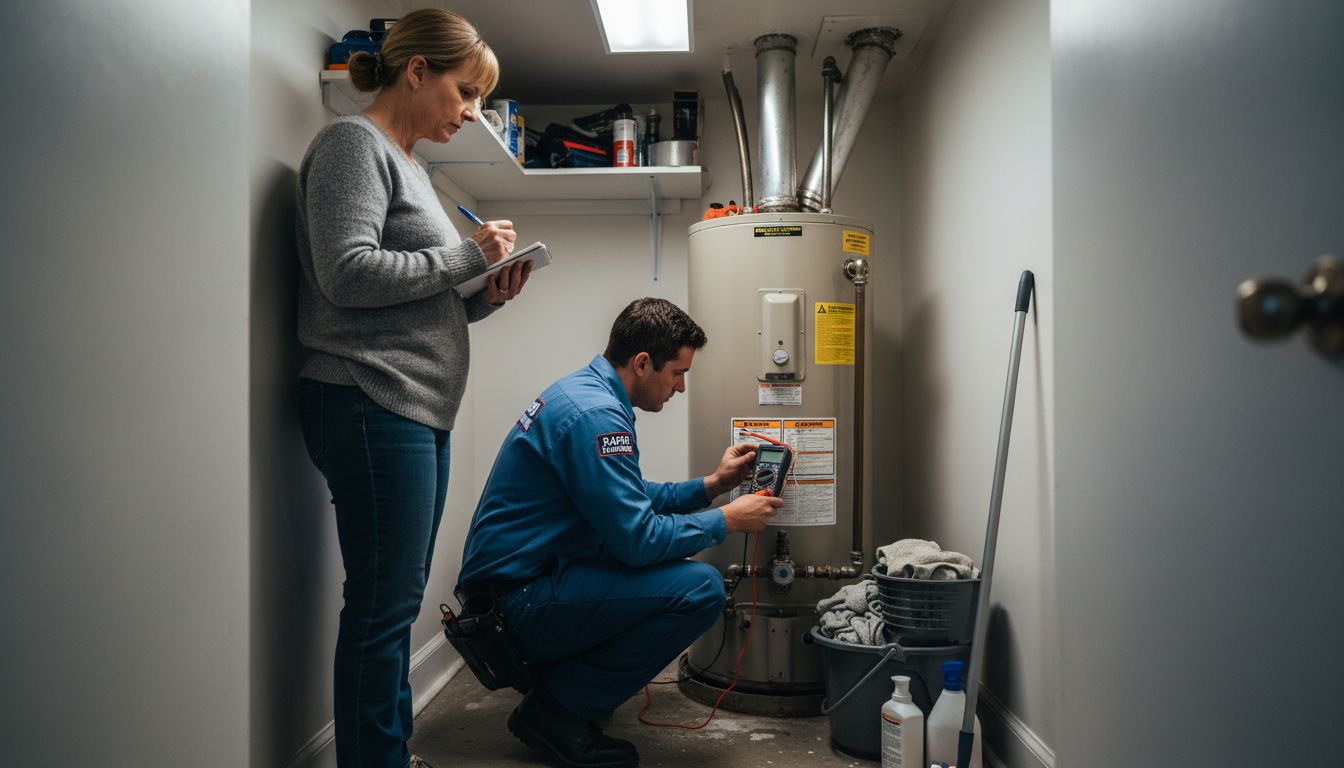
The diagnostic process typically involves several key evaluation stages. Technicians first conduct detailed performance tests, examining temperature consistency, pressure levels, and overall system responsiveness. They meticulously inspect temperature and pressure relief valves, thermostats, heating elements, tank integrity, and connection points. Electrical and gas supply systems receive careful scrutiny, with technicians using specialized testing equipment to verify proper voltage, current flow, and fuel delivery mechanisms.
Water heater troubleshooting requires understanding complex interaction between mechanical and electrical systems, demanding extensive technical knowledge and precision. Advanced diagnostic tools enable technicians to detect subtle anomalies that might escape untrained observation. These tools include thermal imaging cameras, electrical multimeters, pressure gauges, and specialized sensors that can identify microscopic variations in system performance, helping predict potential future failures before they become catastrophic problems.
Pro tip: Request a comprehensive diagnostic report from your technician that details all tested components and their current operational status, providing transparency about your water heater’s health.
Common Repair Procedures and Safety Precautions
Water heater repair involves a complex series of specialized procedures that prioritize both technical precision and personal safety. Water heater safety requires comprehensive precautionary measures, ensuring technicians and homeowners minimize potential risks during maintenance and repair processes. The most critical initial step involves completely disconnecting power sources – shutting off electrical circuits for electric heaters or closing gas valves for gas-powered systems.
Common repair procedures typically include addressing specific component failures. Technicians frequently replace faulty pressure and temperature relief valves, repair or replace heating elements, flush sediment accumulation from tank interiors, and diagnose control system malfunctions. Each intervention requires meticulous attention to detail, with careful inspection of connection points, electrical circuits, and potential wear indicators that could compromise system performance or safety.
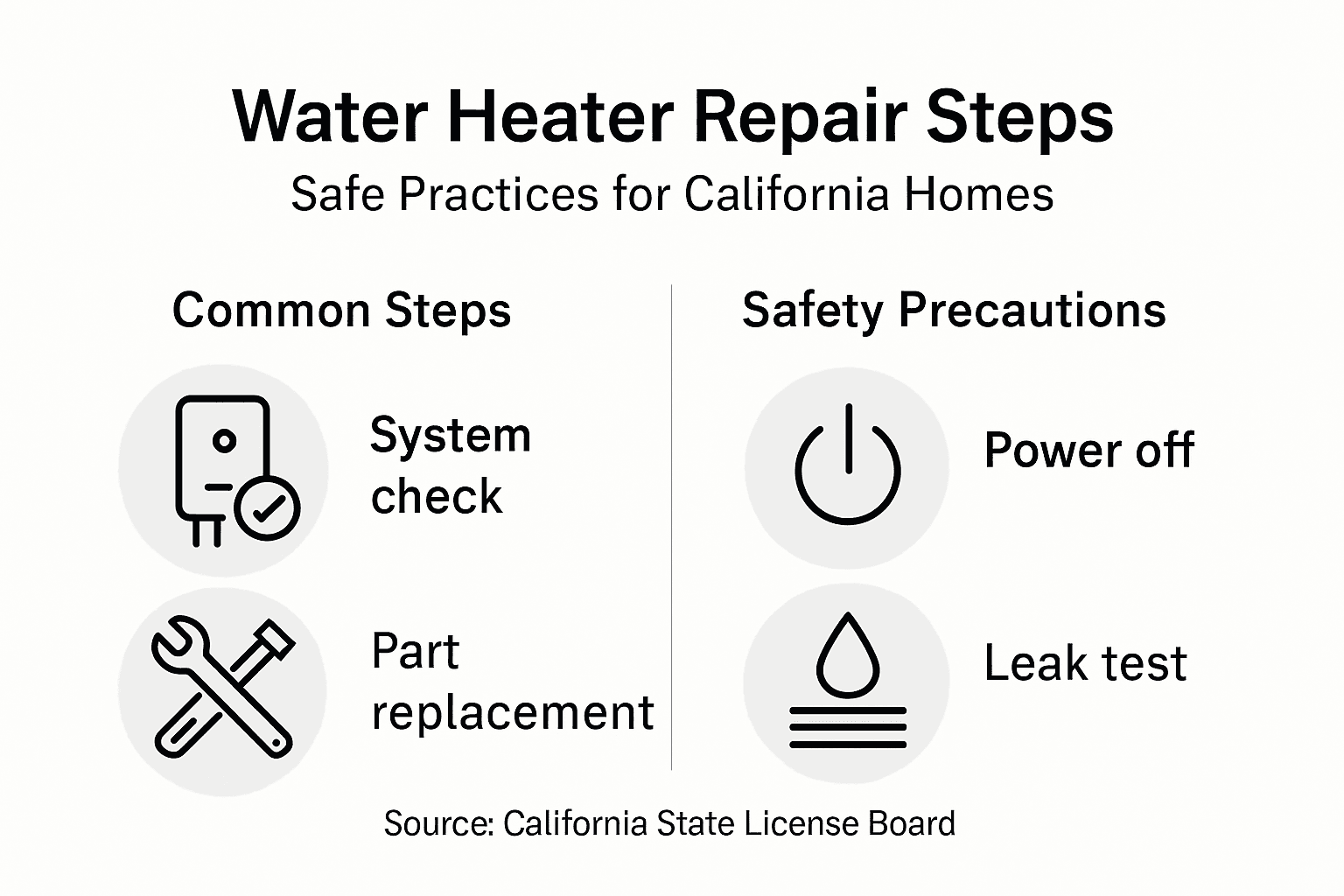
Replacement and maintenance techniques follow strict safety protocols, designed to protect both the technician and the home’s infrastructure. Proper personal protective equipment is essential, including heat-resistant gloves, safety glasses, and non-conductive footwear. Technicians must ensure adequate ventilation, especially when working with gas-powered systems, and carefully drain tanks to reduce pressure and temperature before beginning intricate repair work. Comprehensive testing follows each repair to confirm system integrity and operational safety.
Pro tip: Always maintain a written log of all water heater repairs, documenting replaced components, diagnostic findings, and recommended future maintenance to track your system’s long-term health.
Repair Costs, DIY vs. Professional Service
Water heater repair presents homeowners with a critical decision between attempting do-it-yourself solutions and hiring professional services. Repair costs vary significantly based on problem complexity, with minor interventions like valve or heating element replacements typically being more affordable compared to comprehensive system overhauls. While DIY approaches might seem financially attractive initially, they carry substantial risks that can ultimately increase overall expenses.
Professional repair services offer comprehensive benefits beyond simple problem resolution. Certified technicians bring specialized knowledge, ensuring repairs comply with local building codes, maintain manufacturer warranties, and address underlying issues that untrained individuals might overlook. Complex water heater systems, especially newer technologies like heat pump models, require precise diagnostic skills and specialized tools that go far beyond basic home maintenance capabilities.
Water heater repair involves intricate technical considerations that extend beyond immediate cost calculations. Improper repairs can lead to significant safety hazards, including gas leaks, electrical malfunctions, or structural water damage. Professional technicians not only fix immediate problems but also provide comprehensive system assessments, identifying potential future failures and recommending preventative maintenance strategies that can extend your water heater’s operational lifespan.
Pro tip: Request detailed written estimates from multiple professional services, comparing not just total cost but also warranty coverage, included diagnostic services, and technician certifications.
Below is a summary of when professional repair is crucial versus when DIY might be sufficient:
| Situation | DIY Suitable? | Professional Required Because |
|---|---|---|
| Minor leak or valve issue | Sometimes, with skill | Advanced diagnostics needed |
| Inconsistent hot water | Rarely | Electrical/gas hazards possible |
| Unusual noises, rust, leaks | No | Safety risks, system assessment needed |
| New/unit-specific repairs | No | Manufacturer warranty, tech knowledge |
California Safety Codes and Legal Requirements
California’s water heater safety regulations represent some of the most comprehensive and stringent standards in the United States, designed to protect homeowners from potential hazards associated with water heating systems. These regulations encompass a wide range of safety requirements, including mandatory installation procedures, specific equipment standards, and precise technical specifications that contractors must follow to ensure public safety.
The California Building Standards Code (Title 24) mandates specific safety protocols for water heater installations and repairs. Key requirements include mandatory seismic strapping to prevent system displacement during earthquakes, precise venting specifications to eliminate carbon monoxide risks, and explicit guidelines for temperature and pressure relief valve installations. These regulations are not merely suggestions but legally enforceable standards that carry significant penalties for non-compliance.
Contractor licensing represents another crucial aspect of California’s safety framework, with the Contractors State License Board (CSLB) strictly regulating who can perform water heater repairs and installations. Licensed professionals must demonstrate comprehensive knowledge of state building codes, pass rigorous examinations, and maintain ongoing certification. Homeowners who hire unlicensed contractors risk voiding insurance claims, facing potential legal challenges, and compromising their property’s safety and structural integrity.
Pro tip: Always verify a contractor’s current license status with the California Contractors State License Board before authorizing any water heater repair or installation work.
Reliable Water Heater Repair Solutions Tailored for California Homes
Facing inconsistent hot water, leaks, or unusual noises from your water heater can be stressful and pose safety risks. As highlighted in the article, addressing these challenges requires expert diagnosis, adherence to California safety codes, and licensed technician skills to ensure your home stays safe and comfortable. MDTech Services understands the unique repair demands of different water heater types such as storage tank, tankless, and heat pump models, providing precise solutions that prevent costly damage and extend your system’s life.

Choose MDTech Services for expert water heater repair and upgrades in Orange County and Los Angeles County. Our licensed team prioritizes safety, offers quick response times, and uses advanced diagnostic tools to uncover the root causes behind your water heater issues. Don’t wait until a minor problem becomes a major hazard. Book your professional service today and experience dependable repairs with a trusted local partner by visiting MDTech Services. Learn more about our comprehensive appliance repair and installation services and secure your home’s hot water reliability now.
Frequently Asked Questions
What should I do if my water heater is leaking?
If your water heater is leaking, it’s essential to turn off the power supply and shut off the water supply to prevent water damage. It’s advisable to call a licensed technician to diagnose and repair the issue as soon as possible.
How can I tell if my water heater needs repair?
Common signs that your water heater needs repair include inconsistent water temperature, unusual noises coming from the unit, visible leaks, rust or corrosion on the tank, and increased energy bills. If you notice these issues, consider scheduling a diagnostic appointment with a technician.
What are the different types of water heaters, and do they have different repair needs?
Yes, different types of water heaters have unique repair considerations. Storage tank water heaters are prone to sediment buildup and corrosion, while tankless units may have complex heat exchanger mechanisms. Heat pump water heaters require electrical expertise, and solar water heaters have specific connections that need attention.
Is it worth it to hire a professional for water heater repairs instead of attempting to do it myself?
While DIY repairs may seem cost-effective, they often carry risks that can lead to safety hazards, such as gas leaks or electrical malfunctions. Hiring a professional ensures compliance with safety regulations, adherence to warranties, and access to specialized knowledge and tools for precise diagnostics and repair.