
Sweltering summers across Orange County and Los Angeles County leave many American homeowners frustrated by inconsistent AC performance. With over 60 percent of local homes reporting cooling challenges during peak heat waves, reliable climate control is far from guaranteed. Understanding how air conditioning actually works and recognizing the pitfalls of common AC myths empowers you to make smarter decisions for your home’s efficiency and comfort.
Table of Contents
- Defining AC Cooling and Common Myths
- Primary Reasons Your AC Stops Cooling
- Troubleshooting Steps for Homeowners
- Regional HVAC Challenges in Southern California
- Risks, Costs, and When to Call Experts
Key Takeaways
| Point | Details |
|---|---|
| Understanding AC Functionality | Air conditioning works by transferring heat from inside spaces to the outside, using refrigerants for effective cooling. |
| Myth Busting | Common misconceptions, such as larger units being better or lowering the thermostat quickly cooling a room, can lead to inefficient use and maintenance. |
| Regular Maintenance Importance | Scheduling annual professional maintenance can prevent significant cooling issues and extend the lifespan of the system. |
| Regional Challenges | Homeowners in regions like Southern California should adapt AC strategies to account for extreme heat and environmental factors, such as urban heat and wildfire impacts. |
Defining AC Cooling and Common Myths
Air conditioning is a sophisticated cooling technology that goes far beyond simply blowing cold air. Air conditioning systems function by systematically removing heat from interior spaces, creating comfortable living environments through complex thermodynamic processes.
At its core, air conditioning operates through a precise heat transfer mechanism. The system uses refrigerants to absorb indoor heat, transport it outside, and circulate cooler air back into living spaces. When functioning correctly, an AC unit can reduce indoor temperatures by 10 to 20 degrees Fahrenheit within minutes, providing rapid temperature control.
Several persistent myths surround air conditioning technology that can mislead homeowners. Common misconceptions include:
- Lowering the thermostat dramatically will cool a room faster
- Bigger AC units always perform better
- Running an AC continuously is more energy efficient than turning it on and off
- All AC systems work identically across different home configurations
Environmental considerations play a significant role in modern air conditioning design. Climate research indicates that these systems consume substantial global energy, making efficiency increasingly important for both cost savings and ecological sustainability.
Pro tip: Check your AC unit’s seasonal energy efficiency ratio (SEER) rating before purchasing, as higher ratings indicate more energy-efficient performance.
Primary Reasons Your AC Stops Cooling
Air conditioning systems can fail due to multiple interconnected factors that compromise their cooling performance. Research on cooling challenges reveals that most cooling issues stem from preventable mechanical and environmental stressors.
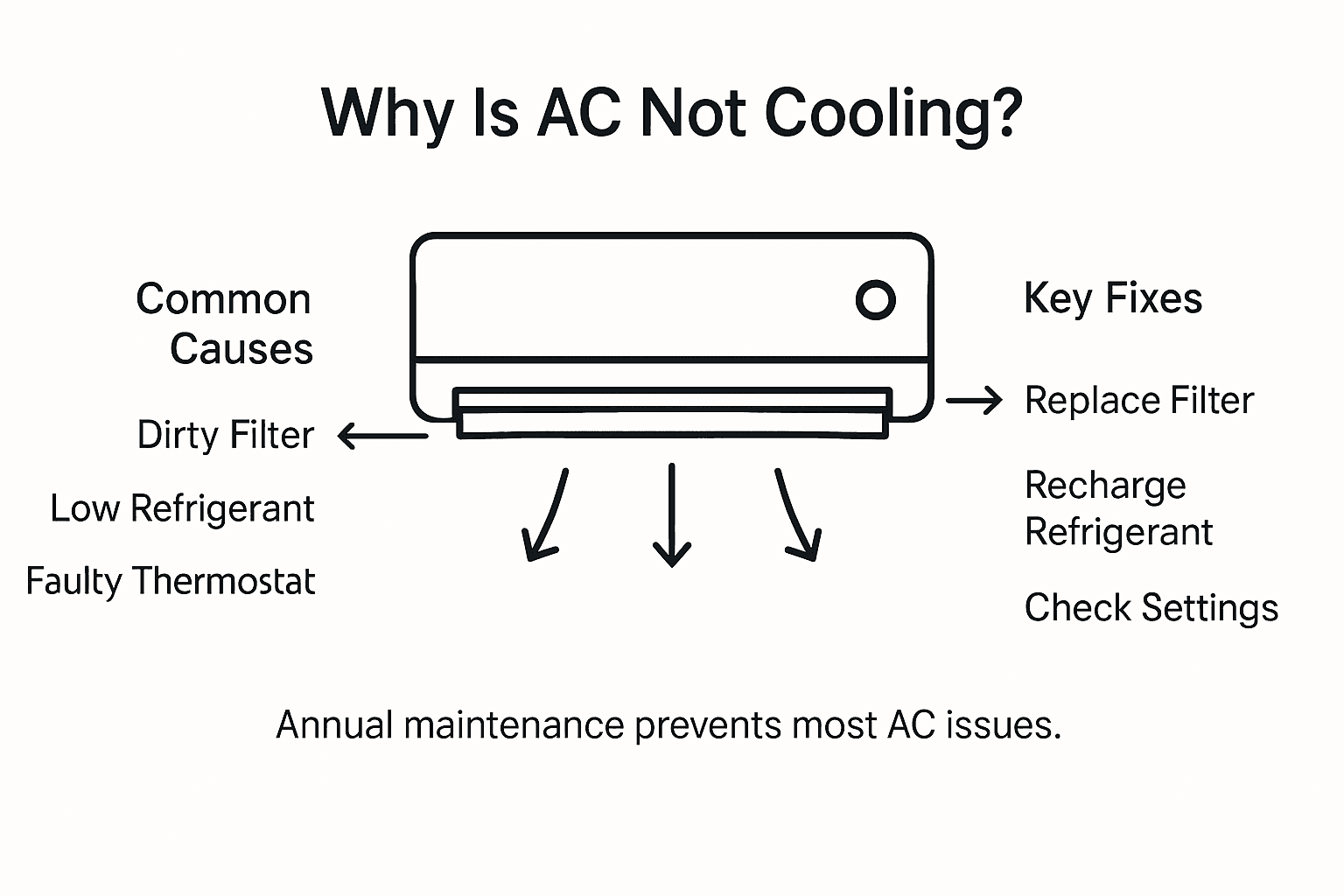
The most common reasons for AC cooling failures include:
- Refrigerant Leaks: Low refrigerant levels prevent proper heat absorption and transfer
- Dirty Air Filters: Blocked filters restrict airflow, reducing cooling efficiency
- Electrical Component Failures: Faulty capacitors, motors, or wiring interrupt system operations
- Compressor Malfunctions: The heart of the AC system, compressor issues can completely halt cooling
- Thermostat Problems: Incorrect sensor readings or calibration can disrupt temperature regulation
Mechanical wear represents a significant challenge for home cooling systems. Components like condenser coils, fan motors, and refrigerant lines experience gradual degradation that can dramatically reduce performance. Homeowners often overlook these subtle changes until complete system failure occurs.
Environmental factors also play a critical role in AC performance. Extreme temperatures, high humidity, and persistent usage can accelerate system breakdown, making regular maintenance essential for long-term reliability.
Pro tip: Schedule professional AC maintenance annually before peak summer months to catch potential issues early and prevent unexpected cooling system failures.
Here’s a quick reference comparing AC issues and recommended homeowner actions:
| Issue Type | Likely Impact | DIY Action | Need Professional Help |
|---|---|---|---|
| Refrigerant leaks | Poor cooling, system strain | None—hazardous | Essential |
| Dirty air filter | Low airflow, high energy use | Replace filter | Rare |
| Electrical failure | Unit won’t start, safety risk | Check breakers | Essential |
| Compressor malfunction | No cooling at all | Inspect for noise | Essential |
| Thermostat miscalibration | Temperature swings | Replace batteries | Sometimes |
Troubleshooting Steps for Homeowners
Troubleshooting an air conditioning system requires a systematic and methodical approach. HVAC troubleshooting techniques can help homeowners diagnose issues before calling a professional, potentially saving time and money.
Start with these essential diagnostic steps:
- Check Thermostat Settings
- Verify the unit is set to “cool” mode
- Ensure temperature is set below current room temperature
- Replace batteries if the thermostat appears unresponsive
- Inspect Power and Electrical Components
- Check circuit breakers for tripped switches
- Examine electrical connections for visible damage
- Verify the outdoor condenser unit has power
- Evaluate Airflow and Filtration
- Remove and inspect air filters for dirt and blockages
- Clean or replace filters if they appear clogged
- Check air registers and vents for obstructions
Advanced homeowners can perform more detailed diagnostics by listening for unusual system noises, checking refrigerant lines for frost or condensation issues, and examining the outdoor compressor unit for visible damage or debris.
Warning Signs that indicate professional intervention is necessary include:
- Persistent warm air despite troubleshooting
- Loud grinding or squealing noises
- Water leaks around the indoor unit
- Frequent system cycling
Pro tip: Keep a maintenance log documenting each troubleshooting attempt and system performance to help identify recurring issues and assist technicians during professional inspections.
Regional HVAC Challenges in Southern California
Southern California’s unique climate presents extraordinary challenges for residential cooling systems. Climate adaptation research reveals that extreme heat waves and prolonged high-temperature periods place unprecedented stress on HVAC infrastructure across the region.
Key regional HVAC challenges include:
- Urban Heat Island Effect: Dense metropolitan areas like Los Angeles experience significantly higher temperatures compared to surrounding rural zones
- Wildfire Impact: Smoke and particulate matter compromise air quality and air conditioning system performance
- High Energy Demand: Increased cooling requirements during summer months strain electrical grids
- Water Conservation Constraints: Limited water resources affect evaporative cooling technologies
Environmental regulations play a crucial role in addressing these challenges. California Air Resources Board initiatives focus on promoting energy-efficient cooling solutions and reducing overall carbon emissions from residential HVAC systems.
Homeowners in Southern California must adapt their cooling strategies to address these unique environmental conditions. This means investing in high-efficiency systems, implementing smart temperature management, and considering supplemental cooling technologies that can operate effectively in extreme heat scenarios.

Pro tip: Install reflective roofing or use light-colored exterior paint to reduce heat absorption and minimize additional cooling load on your HVAC system.
Here’s how Southern California’s climate factors affect AC system choices:
| Regional Challenge | AC System Impact | Best Homeowner Strategy |
|---|---|---|
| Urban heat island | Higher cooling demand | Invest in high-efficiency AC |
| Wildfire smoke | Filter clogging, poor air | Use advanced air filtration |
| High energy demand | Grid stress, rolling blackouts | Install smart thermostats |
| Water scarcity | Limits some cooling methods | Choose non-evaporative units |
Risks, Costs, and When to Call Experts
Navigating AC repair costs and potential risks requires a strategic understanding of system complexity and potential failure points. Consumer research on air conditioning repairs reveals that repair expenses can vary dramatically based on the specific issue and system age.
Cost Breakdown for Common AC Repairs:
- Minor Repairs: $150 – $500
- Moderate Component Replacement: $500 – $1,500
- Major System Repairs: $1,500 – $3,500
- Complete System Replacement: $3,500 – $7,500
Certain risks demand immediate professional intervention. Refrigerant leak investigations highlight the environmental and safety concerns associated with attempting complex repairs without specialized knowledge. Homeowners should consider professional services when encountering:
- Persistent refrigerant leaks
- Electrical component failures
- Compressor malfunctions
- Complex system diagnostics
- Warranty-protected equipment
Understanding the financial and safety implications of DIY repairs can save homeowners significant money and prevent potential system damage. Professional HVAC technicians bring expertise in diagnosing underlying issues, ensuring comprehensive repairs, and maintaining system efficiency.
Regulatory compliance and safety standards further underscore the importance of professional intervention. Certified technicians understand local building codes, environmental regulations, and manufacturer specifications that amateur repairs might inadvertently violate.
Pro tip: Maintain a comprehensive maintenance log documenting all repairs, professional visits, and system performance to help technicians diagnose issues more effectively and potentially reduce long-term repair costs.
Fast and Reliable Solutions When Your AC Stops Cooling
If your air conditioning unit is failing to cool your home despite your troubleshooting efforts, you are not alone. Common issues like refrigerant leaks, dirty filters, or thermostat problems can leave you uncomfortable, especially during the extreme heat Southern California experiences. Understanding these challenges is the first step, but getting expert help is essential to restore your home’s comfort quickly and safely.

MDTech Services specializes in professional HVAC repair and installation across Orange County and Los Angeles County. With licensed technicians experienced in diagnosing and fixing common AC problems, we ensure your system runs efficiently and reliably. Don’t let electrical failures, compressor malfunctions, or filter issues cause you stress or higher energy costs. Visit MDTech Services today to schedule your service and benefit from responsive, trustworthy support tailored to homeowners who demand quality and safety. Act now to avoid costly repairs and stay cool when it matters most.
Frequently Asked Questions
Why is my air conditioning unit blowing warm air?
Your air conditioning unit may be blowing warm air due to refrigerant leaks, dirty air filters, or thermostat issues. It’s important to check these components first before seeking professional help.
How often should I change my air filter to ensure proper cooling?
You should change your air filter every 1 to 3 months, depending on your usage and the filter type. A clean filter helps maintain airflow and improves cooling efficiency.
What should I do if my AC system is making strange noises?
If your AC system is making loud grinding or squealing noises, it may indicate a malfunctioning component. Shut off the unit and consult a professional technician for further diagnosis.
When should I call a professional for AC repairs?
You should call a professional for AC repairs if you encounter persistent issues such as refrigerant leaks, electrical component failures, or if the system is not cooling despite troubleshooting efforts.