
Appliance leaks impact thousands of American households every year, with kitchen and laundry units driving over 35 percent of home water damage claims. For homeowners in Orange and Los Angeles County, a hidden leak can lead to costly repairs and safety risks faster than you think. Quick action and expert help make all the difference. Get clear guidance on identifying leaks, busting common myths, and finding the right safety-focused professionals for fast repairs.
Table of Contents
- What Appliance Leaks Are And Common Myths
- Types Of Appliance Leaks And Root Causes
- Signs Your Appliance May Be Leaking
- Risks And Damage Linked To Appliance Leaks
- Prevention And Repair Steps For Homeowners
Key Takeaways
| Point | Details |
|---|---|
| Understanding Leaks | Not all appliance leaks indicate total failure; many arise from minor issues that can be repaired. |
| Proactive Maintenance | Regular inspections of connections, seals, and drainage systems can prevent significant water damage. |
| Warning Signs | Homeowners should look for unusual moisture patterns and sudden increases in utility bills to detect leaks early. |
| Financial Risks | Neglected appliance leaks can lead to expensive repairs and reduced property value over time. |
What Appliance Leaks Are and Common Myths
Appliance leaks represent a serious concern for homeowners, potentially causing significant water damage and financial strain. Consumer data reveals that kitchen and laundry appliances like refrigerators, washers, and dishwashers are most prone to leaking, creating urgent repair needs for many households across Orange and Los Angeles County.
Contrary to popular misconceptions, not all appliance leaks indicate total equipment failure. Many leaks stem from minor issues like faulty water lines, worn seals, or ice maker malfunctions that can be repaired without complete replacement. Homeowners often mistakenly believe that leaks only occur in older appliances, but the reality is more complex. Water damage research shows leaks can emerge in both new and old units, frequently resulting from installation or maintenance challenges.
Understanding the nuanced nature of appliance leaks helps homeowners take proactive steps. Common leak sources include:
Here’s a comparative overview of common appliances and typical leak repair difficulty:
| Appliance Type | Leak Frequency | Typical Repair Complexity |
|---|---|---|
| Washing Machine | High | Moderate to Complex |
| Dishwasher | Moderate | Moderate |
| Refrigerator | Moderate | Simple to Moderate |
| Water Heater | Low | Complex |
| Ice Maker | Moderate | Simple |
This table highlights which appliances are prone to leaks and how difficult they usually are to repair.
- Damaged water supply lines
- Deteriorated door seals
- Clogged drainage systems
- Cracked internal components
- Loose or corroded connections
Pro tip: Conduct monthly visual inspections of your appliances, checking for small moisture signs or unusual dampness around connections and seals to catch potential leaks early.
Types of Appliance Leaks and Root Causes
Appliance leaks are complex issues with multiple potential origins, each requiring specific diagnostic approaches. Washing machine leaks often stem from specific mechanical failures like worn-out hoses, drainage blockages, and damaged component seals, presenting unique challenges for homeowners in identifying and resolving water damage risks.
Dishwashers represent another critical area of potential water leakage. These appliances frequently experience leaks from faulty door seals, clogged drainage systems, broken water inlet valves, and compromised hose connections. Understanding these specific leak types helps homeowners recognize early warning signs and prevent extensive water damage.
Major appliance leak categories include:
- Washing Machine Leaks
- Damaged water supply hoses
- Worn door seals
- Cracked pump components
- Loose drainage connections
- Dishwasher Leaks
- Deteriorated door gaskets
- Clogged drainage pathways
- Faulty water inlet valves
- Loose or corroded hose fittings
Pro tip: Invest in high-quality stainless steel braided supply lines for your appliances, which offer superior durability and significantly reduce the risk of unexpected water leaks.
Signs Your Appliance May Be Leaking
Detecting potential appliance leaks requires careful observation of subtle warning signs that homeowners often overlook. Unusual moisture patterns, unexpected sounds, and visual indicators can signal developing problems before they escalate into major water damage incidents.
Water-Related Warning Signs include:
- Watery puddles around appliance bases
- Unexplained damp spots on floors
- Sudden increases in water utility bills
- Musty or moldy odors near appliances
- Visible water stains or discoloration
Refrigerators and other major kitchen appliances frequently exhibit specific leak indicators such as ice build-up, condensation issues, and overflowing drip pans. Homeowners should pay special attention to these areas, as early detection can prevent costly repairs and potential structural damage to their homes.
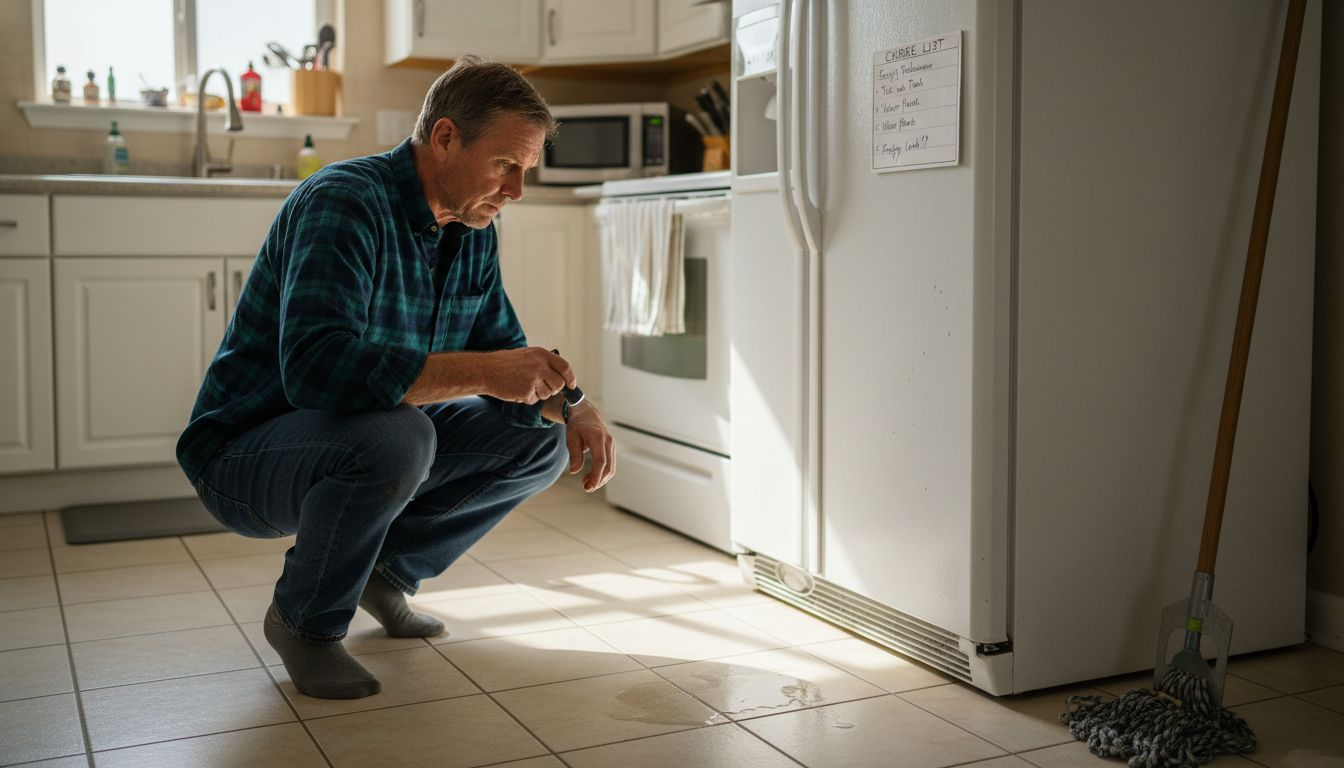
Additional diagnostic techniques involve monitoring water meter activity and conducting regular visual inspections of appliance connections, hoses, and seals. Pay close attention to any continuous water usage even when appliances are not actively running, as this could indicate a hidden leak.
Pro tip: Invest in a moisture detection meter to quickly identify potential leak sources before they cause significant damage to your home’s floors and walls.
Risks and Damage Linked to Appliance Leaks
Appliance leaks represent far more than simple inconveniences, presenting serious potential risks to home safety and structural integrity. Water damage can rapidly escalate from minor moisture issues to catastrophic home deterioration, impacting multiple systems and creating long-term financial burdens.
Primary Risks of Unaddressed Appliance Leaks include:
- Structural wood rot and foundation damage
- Electrical system hazards
- Extensive flooring and cabinetry destruction
- Toxic mold growth
- Increased utility expenses
- Potential property value reduction
Electrical dangers pose particularly significant threats. Water contact with electrical systems can create short circuits, potentially causing fires or rendering critical home infrastructure unsafe. Moisture trapped within walls or beneath flooring creates ideal conditions for aggressive mold colonization, which can compromise indoor air quality and trigger serious health problems for residents.
The financial implications of neglected leaks can be substantial. What might initially appear as a minor drip can transform into thousands of dollars in comprehensive repairs if left unaddressed. Proactive monitoring and immediate intervention remain the most cost-effective strategies for protecting your home’s structural and systemic integrity.
This summary shows potential home impacts from appliance leaks:
| Risk Type | Short-Term Impact | Long-Term Impact |
|---|---|---|
| Water Damage | Floor staining or warping | Foundation weakening |
| Mold Growth | Musty odors | Respiratory issues |
| Electrical Hazard | Power outage risk | Fire or shock hazard |
| Financial Loss | Unexpected repairs | Lower property value |
Use this guide to understand how leaks can affect your home and health over time.
Pro tip: Schedule quarterly comprehensive inspections of your home’s major appliances, focusing on connection points, seals, and potential moisture accumulation areas to catch potential leaks before they escalate.
Prevention and Repair Steps for Homeowners
Proactive maintenance is the most effective strategy for preventing appliance leaks and minimizing potential water damage risks, requiring homeowners to develop a systematic approach to appliance care and monitoring.
Essential Preventative Maintenance Techniques:
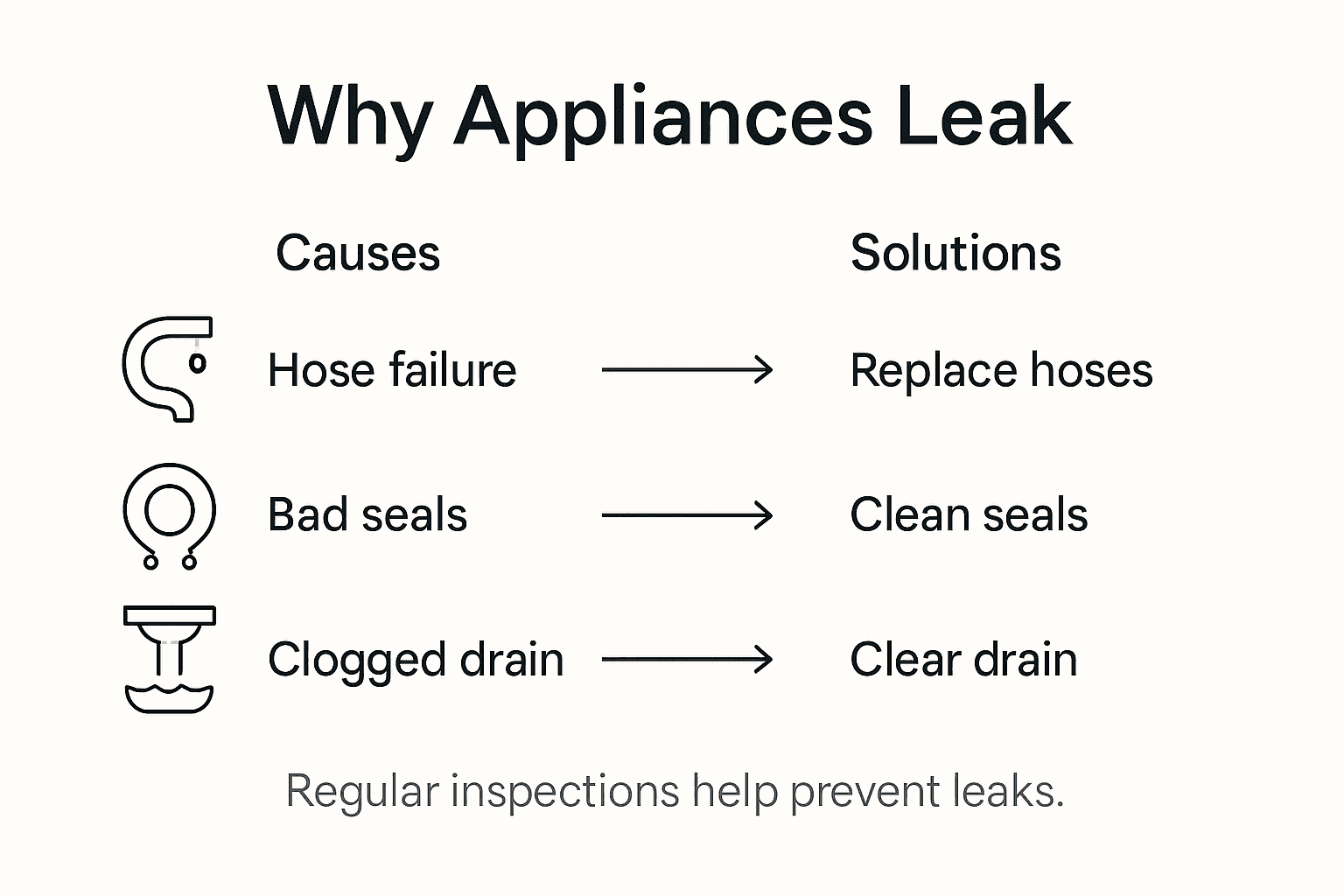
- Regularly inspect water supply lines
- Check and replace worn door seals
- Clean drainage systems
- Tighten loose connections
- Monitor appliance performance
Washing machine leak prevention demands specific attention to hose conditions, connection integrity, and drainage filter maintenance. Homeowners should conduct quarterly comprehensive inspections, focusing on identifying potential vulnerabilities before they escalate into significant problems.
Diagnostic steps for addressing potential leaks include carefully examining hose conditions, checking seal integrity, and verifying connection tightness. Many minor leak issues can be resolved through simple adjustments or component replacements, eliminating the need for expensive professional interventions. Systematic documentation of each inspection can help track appliance health and anticipate potential future maintenance requirements.
Pro tip: Create a digital maintenance log for each major appliance, recording inspection dates, observed conditions, and any repairs to help track potential developing issues and establish a proactive maintenance schedule.
Protect Your Home from Appliance Leaks with Expert Help from MDTech Services
Appliance leaks can cause serious water damage and costly repairs if not addressed quickly. Whether it is a leaking washing machine hose or a faulty refrigerator seal causing unexpected moisture, these common problems require prompt professional repair. MDTech Services specializes in repairing and installing major household appliances in Orange County and Los Angeles County, using licensed technicians who understand the root causes of leaks and how to fix them safely and reliably.

Don’t wait for small drips to turn into expensive damage. Schedule your appliance repair or inspection today with MDTech Services at https://mdtechservices.com. Benefit from fast response times and expert solutions that protect your home’s structure and your peace of mind. Check out our detailed service options and book your appointment easily online now.
Frequently Asked Questions
Why do my appliances leak?
Appliance leaks can occur due to various reasons, including damaged water supply lines, worn door seals, clogged drainage systems, and cracked internal components. Regular inspections can help identify these issues early.
What should I inspect to prevent appliance leaks?
To prevent leaks, regularly inspect water supply lines, check door seals for wear, clean drainage systems, tighten loose connections, and monitor the overall performance of your appliances.
How can I tell if my appliance is leaking?
Signs of a leak may include puddles around the base of the appliance, unexplained damp spots on floors, sudden increases in water bills, and visible water stains or unusual odors near the appliance.
What are the risks of ignoring a leaking appliance?
Ignoring a leaking appliance can lead to serious risks, including structural damage, electrical hazards, toxic mold growth, and increased repair costs. Addressing leaks promptly is essential to protect your home and health.
Recommended
- Dishwasher repair or Installation Garbage disposal repair or Installation Airgap repair pump repair Fixing Dishwashers, Garbage Disposals, and More! – MDTech Services
- Washer repair Washing machine repair. A Second Chance for Washers: How We Transformed Broken Machines into Like-New Appliances – MDTech Services
- Washer Washing machine repair or Installation service Repairing Your Washer: Expert Tips for Fixing and Installing Washing Machines – MDTech Services
- Keywords: Leaking water – MDTech Services
- Understanding the Effects of Water Contamination – My WordPress