
Every year, thousands of American households face costly repairs and unexpected risks because appliances are not properly inspected. Appliance inspections play a crucial role in preventing fires and dangerous carbon monoxide leaks, which the U.S. Consumer Product Safety Commission warns can be life-threatening. By understanding what professional inspections involve, homeowners can take control of their safety and protect their investment while enjoying greater peace of mind.
Table of Contents
- What Appliance Inspection Involves And Why It Matters
- Types Of Appliance Inspections For Homeowners
- Key Steps In A Standard Appliance Inspection
- Safety, Compliance, And Local Regulations
- Common Issues Found And Ways To Address Them
Key Takeaways
| Point | Details |
|---|---|
| Importance of Inspections | Annual appliance inspections are crucial for safety, efficiency, and longevity, particularly for fuel-burning appliances to prevent hazards. |
| Types of Inspections | Homeowners can choose from visual, functional, and comprehensive diagnostic inspections to maintain appliance performance. |
| Compliance and Documentation | Regular inspections help meet local regulations and provide essential documentation for safety and maintenance history. |
| Proactive Maintenance | Addressing common appliance issues early through routine inspections can extend appliance lifespans and reduce repair costs. |
What Appliance Inspection Involves and Why It Matters
Appliance inspection is a critical preventative maintenance process that ensures the safety, efficiency, and longevity of home systems and equipment. The U.S. Consumer Product Safety Commission emphasizes the importance of annual inspections, particularly for fuel-burning appliances, to mitigate potential hazards like carbon monoxide poisoning and fire risks.
A comprehensive appliance inspection typically involves several key components. Technicians will conduct thorough visual assessments, electrical system checks, and performance evaluations. They examine critical elements such as:- Electrical connections and wiring integrity- Fuel line and gas connection stability- Signs of wear, corrosion, or mechanical stress- Operational efficiency and energy consumption- Safety mechanism functionality
Safety precautions represent the most crucial aspect of professional appliance inspections. Regular inspections help homeowners identify potential issues early, preventing minor problems from escalating into expensive repairs or dangerous system failures. Professional technicians use specialized diagnostic tools to detect subtle irregularities that might compromise an appliance’s performance or pose safety risks.
Moreover, routine inspections deliver significant economic benefits beyond immediate safety considerations. By maintaining optimal system performance, homeowners can reduce energy consumption, extend appliance lifespans, and avoid costly emergency repairs. A proactive approach to appliance maintenance not only protects your investment but also ensures consistent, reliable performance across all home systems.
Types of Appliance Inspections for Homeowners
Homeowners have several distinct types of appliance inspections available to ensure their home systems remain safe and operational. InterNACHI outlines comprehensive guidelines for inspecting built-in standard home appliances, which typically fall into three primary categories: visual, functional, and comprehensive diagnostic assessments.
Visual Inspections represent the most basic level of appliance assessment. These evaluations involve examining external appliance components for:- Signs of physical damage- Visible wear and tear- Corrosion or rust- Loose connections- Unusual discoloration or deformation
Functional Inspections go beyond surface-level examinations, testing the actual operational performance of home appliances. Technicians will run diagnostic cycles, measure energy consumption, and verify that safety mechanisms function correctly. Commercial property inspection standards provide insights into the detailed processes professionals use when evaluating complex home systems.
The most advanced inspection type is the Comprehensive Diagnostic Assessment. This thorough evaluation combines visual and functional inspections with advanced technological diagnostics. Specialized tools help detect potential internal issues before they become serious problems. Professional technicians use thermal imaging, electrical resistance testing, and computerized diagnostic equipment to provide homeowners with a complete understanding of their appliance’s health and potential future maintenance requirements.
Key Steps in a Standard Appliance Inspection
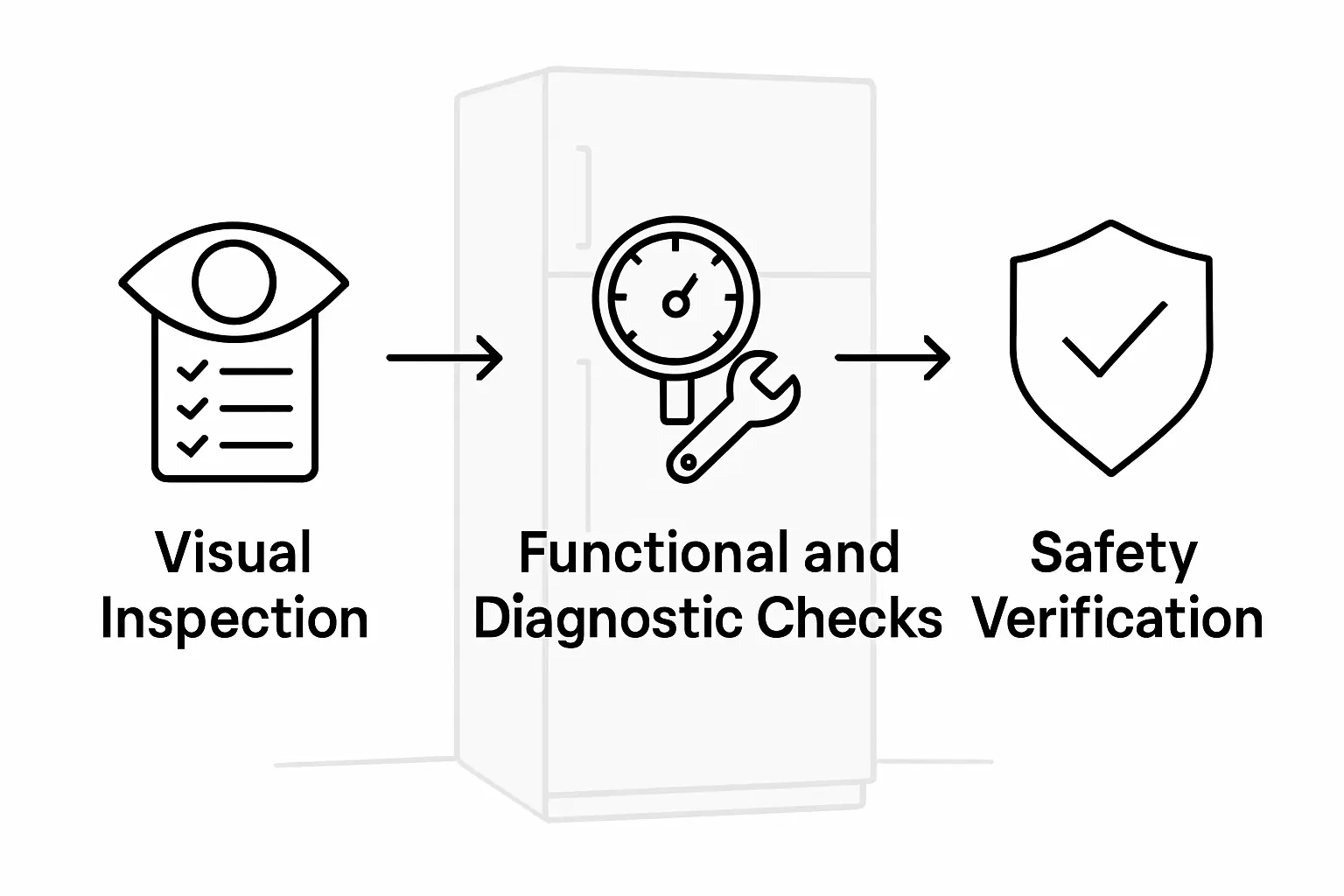
InterNACHI’s comprehensive course materials outline a structured approach to conducting thorough appliance inspections, which typically involve a systematic evaluation of key functional and safety components. Professional technicians follow a meticulous process designed to identify potential operational deficiencies and minimize household risks.
The standard appliance inspection process typically involves several critical steps:
- Initial Visual Assessment
- Examine external appliance surfaces for damage
- Check electrical cords and plugs for wear
- Inspect connection points and mounting hardware
- Look for signs of rust, corrosion, or structural compromise
- Electrical System Evaluation
- Test electrical connections and voltage stability
- Verify grounding mechanisms
- Check circuit breaker compatibility
- Assess potential electrical hazard risks
Safety Verification represents the most crucial stage of the inspection. Professional evaluations are essential for detecting potential kitchen hazards, including carbon monoxide leaks and electrical system irregularities. Technicians use specialized diagnostic tools to measure performance metrics, identify hidden issues, and ensure each appliance operates within manufacturer-recommended safety parameters.
The final phase involves a comprehensive performance assessment. Technicians will run full diagnostic cycles, measure energy consumption, test all operational modes, and generate a detailed report documenting the appliance’s current condition. This systematic approach helps homeowners understand their equipment’s health, anticipate potential maintenance requirements, and prevent unexpected breakdowns.
Safety, Compliance, and Local Regulations
The Consumer Product Safety Commission strongly advises annual inspections of fuel-burning appliances to ensure homeowner safety and prevent potential hazardous incidents. These regulatory guidelines establish critical standards for maintaining safe home environments and protecting residents from potential risks associated with malfunctioning equipment.
Local and state regulations typically mandate specific safety requirements for residential appliance maintenance:
- Mandatory annual inspections for gas-powered appliances
- Required certification of electrical systems
- Documentation of repair and maintenance history
- Compliance with energy efficiency standards
- Adherence to manufacturer recommended service intervals
Compliance Documentation plays a crucial role in maintaining household safety. Certified home inspectors provide essential oversight by verifying that residential appliances meet established safety standards and local regulatory requirements. These professionals conduct comprehensive assessments that go beyond surface-level examinations, identifying potential system vulnerabilities and ensuring ongoing operational integrity.
Homeowners should maintain detailed records of all appliance inspections, repairs, and maintenance activities. These documentation practices not only demonstrate regulatory compliance but also serve as valuable references for insurance purposes, potential home sales, and proactive maintenance planning. By understanding and adhering to local safety regulations, residents can significantly reduce the risk of appliance-related accidents and protect their property and personal safety.
Common Issues Found and Ways to Address Them
Regular appliance inspections help homeowners identify critical issues before they escalate into expensive repairs or safety hazards. Professional technicians consistently discover several recurring problems that can compromise appliance performance and household safety.
Common Appliance Issues typically include:
- Electrical connection degradation
- Worn-out mechanical components
- Compromised insulation
- Inefficient energy consumption
- Potential gas or refrigerant leaks
- Blocked ventilation systems
- Accumulated debris in critical mechanical areas
Electrical System Vulnerabilities represent a significant concern for homeowners. InterNACHI highlights potential kitchen hazards that can emerge from undetected electrical irregularities, including loose connections, outdated wiring, and circuit overload risks. Professional diagnostics can pinpoint these subtle yet dangerous problems before they trigger more severe complications.
Addressing these issues requires a proactive approach. Homeowners should prioritize professional inspections, immediately repair identified problems, and maintain consistent maintenance schedules. Replacing worn components, cleaning critical systems, and ensuring proper electrical connections can significantly extend appliance lifespans, reduce energy consumption, and minimize the risk of unexpected system failures. The investment in routine maintenance ultimately saves money and protects household safety.
Protect Your Home with Expert Appliance Inspection and Repair Services
Ensuring your appliances operate safely and efficiently is essential to protect your home and family from hidden hazards like electrical faults or gas leaks. The detailed process of appliance inspection highlights key concerns such as worn electrical connections, compromised insulation, and potential gas leaks. Addressing these issues promptly can prevent costly repairs and dangerous breakdowns. At MDTech Services, we understand these risks and specialize in the repair and installation of major household appliances, including conversions from LP to natural gas, ensuring your systems meet all safety and performance standards.

Don’t wait until a minor appliance problem becomes a major emergency. Contact MDTech Services today for reliable, licensed technicians in Orange County and Los Angeles County ready to provide comprehensive appliance repair, installation, and HVAC services. Schedule your service now to enjoy peace of mind, improved energy efficiency, and a safer living environment backed by local experts focused on your safety and convenience. Visit our website to book your appointment or learn more about how we can keep your home’s essential appliances running smoothly.
Frequently Asked Questions
What is the purpose of an appliance inspection?
An appliance inspection aims to ensure safety, efficiency, and longevity of home systems and equipment. It helps identify potential hazards, such as carbon monoxide leaks and electrical issues, before they escalate into serious problems.
How often should I have my appliances inspected?
It is recommended to have annual inspections for fuel-burning appliances and regular assessments for all household appliances to maintain optimal performance and safety.
What does a typical appliance inspection include?
A typical appliance inspection includes visual assessments, electrical system checks, performance evaluations, and safety mechanism functionality tests to ensure all aspects of the appliance are operating as intended.
What are common issues found during appliance inspections?
Common issues include electrical connection degradation, worn-out mechanical components, inefficient energy consumption, and potential gas or refrigerant leaks. Identifying these problems early can prevent costly repairs and enhance safety.
Recommended
- Appliance repair or Installation service Appliance Repair vs. Replacement: How to Make the Right Decision for Your Home – MDTech Services
- Dishwasher repair or Installation Garbage disposal repair or Installation Airgap repair pump repair Fixing Dishwashers, Garbage Disposals, and More! – MDTech Services
- Washer repair Washing machine repair. A Second Chance for Washers: How We Transformed Broken Machines into Like-New Appliances – MDTech Services
- Dishwasher repair installation service The Ultimate Guide to Dishwasher Repair: Troubleshooting Tips and Tricks – MDTech Services
- Preparing for Food Inspections: A Complete Guide for 2025 – Probe IT