
Most homeowners pay between $75 and $250 for professional condensate drain cleaning, according to cost data from HomeGuide. That price climbs into the several-hundred-dollar range when a technician has to replace a failed condensate pump or fight limited access to the line. If you see standing water in the drain pan or the unit has shut down on its own, check the pan first, then call a technician if a pump issue is suspected. The breakdown below maps your symptoms to the price band you should expect.
TL;DR:
- Most condensate drain cleaning costs between $75 and $150 for simple flushes, but extensive repairs or pump replacements can reach several hundred dollars.
- Access difficulties, clog severity, and the need for code-compliant parts are major factors that can significantly increase the final bill.
- DIY methods are suitable only for light, early-stage clogs, while persistent backups or signs of mechanical failure require professional diagnosis.
- A proper inspection should include checking the drain pan, trap, full route, and pump operation, with a detailed written scope of work.
- Routine annual flushes, combined with simple maintenance habits, can prevent costly emergency repairs and water damage.
Table of Contents
- What drives condensate drain cleaning cost
- What changes the price of your quote
- DIY methods, their limits, and when to stop
- How a technician should diagnose the problem
- Preventing clogs between service visits
- What a thorough service visit actually looks for
- Why the cheapest quote isn’t always the smartest one
- Getting professional help from MDTech Services
- Sources
- FAQ
What drives condensate drain cleaning cost
Price depends almost entirely on what the technician finds once the access panel comes off. A simple clog near the outlet costs far less to clear than a collapsed trap or a pump that has stopped cycling.
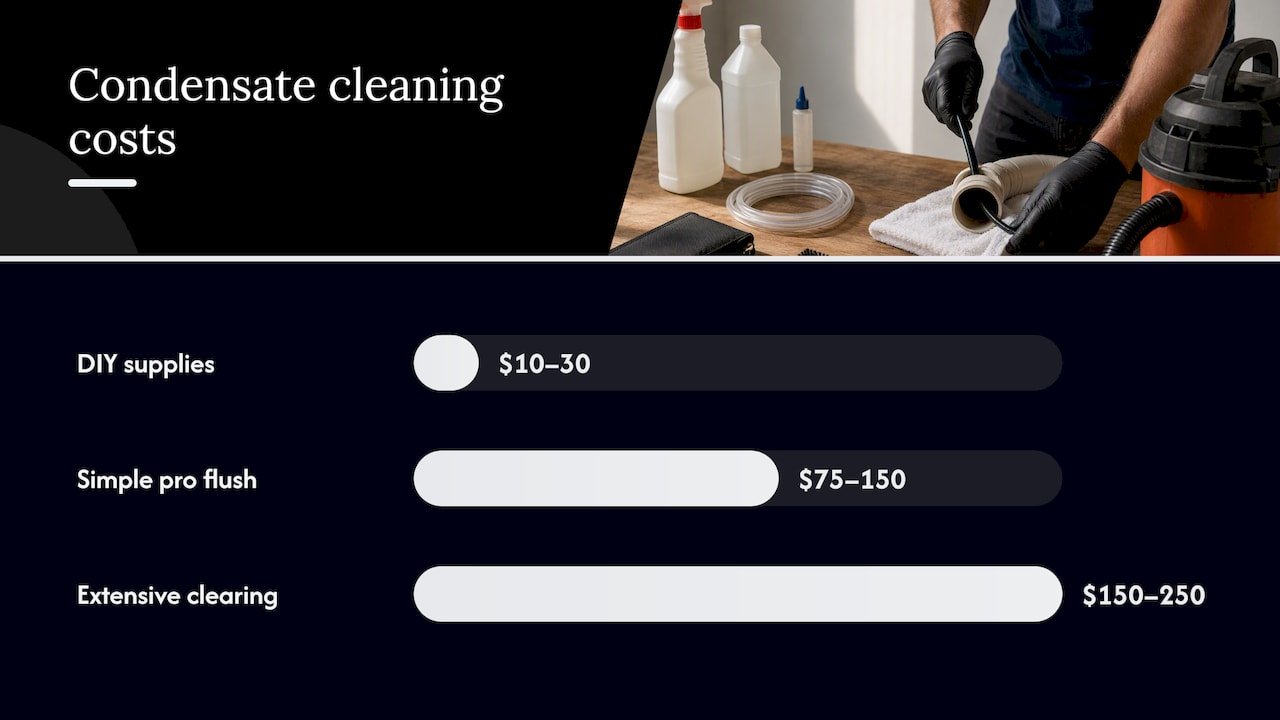
Industry pricing data from HomeGuide groups the work into a few clear buckets:
- DIY supplies: $10 to $30 for a wet/dry vac attachment, a stiff brush, or distilled vinegar, suited only to light, early-stage buildup near the line’s outlet.
- Simple pro flush: roughly $75 to $150, covering a vacuum-out or flush of the line, a pan check, and a basic flow test.
- Extensive clearing: around $150 to $250, for jobs that need hydro-jetting, trap disassembly, or clearing a route with multiple bends.
- Pump replacement: several hundred dollars once parts and labor are added, triggered by a failed float switch or a pump that no longer discharges water.
A condensate drain cleaning job typically runs within a moderate price range for standard clearing work, per HomeGuide’s cost data, with pump failures and difficult access pushing the total higher.
Picture two common scenarios. A homeowner notices a little standing water in the pan after a humid week: that is usually a simple flush. A homeowner who keeps finding water on the floor near the furnace closet, even after wiping it up, is more likely looking at a pump or float switch failure, which belongs in the higher price band.
What changes the price of your quote
Two jobs that sound identical over the phone can land in different price brackets once a technician sees the actual setup. A few factors explain most of the spread between a $100 invoice and a $400 one.
- Access and location: a drain tucked behind finished walls or in a tight attic takes longer to reach than one in an open utility closet.
- Clog severity: light buildup clears with a flush, while compacted sludge or a collapsed section may require hydro-jetting or pump replacement.
- Labor time and fees: travel distance, after-hours calls, and the number of technician-hours on site all add to the bill.
- Code-related work: if the termination point or sewer connection needs correcting, permit fees or code-compliant parts can raise the total.
Pro Tip: Ask any contractor for an itemized quote before work starts. A number with no breakdown often hides which of these factors pushed the price up.
DIY methods, their limits, and when to stop
Light clogs near the line’s outlet are reasonable for a homeowner to tackle, and the tools cost far less than a service call. Beyond that, the risk of pushing a problem deeper or creating a new leak goes up fast.
- Turn off the system, then use a wet/dry vac at the drain’s outside termination to pull out loose debris.
- Run a stiff, flexible brush through the accessible section of the line to scrub organic buildup from the walls.
- Flush the line with a cup of distilled vinegar or hot water to loosen minor slime, then recheck for flow.
- Use low-pressure compressed air, never a shop compressor at full pressure, to clear a short, accessible stretch without blowing a joint apart.
Trade-education resources like AC Service Tech note that pushing air or water at high pressure can force a blockage deeper or crack a joint, turning a $20 fix into a bigger repair. Vinegar and hot water help with organic buildup but will not fix a cracked pump housing or a sagging section of tubing.
Pro Tip: If you’ve tried a flush and the water is still backing up, stop. A repeated backup after DIY cleaning usually points to a mechanical failure, not a simple clog.
Call a professional once you see a failed pump, repeated backups within the same season, or any sign of water damage on ceilings, walls, or flooring near the unit.
How a technician should diagnose the problem
A quote that only says “drain cleaning” without listing what was tested leaves you with no way to know whether the real problem was found. Manufacturer guidance from Carrier notes that a line can look clear at the outlet and still fail because of a blocked trap, sagging tubing, or a bad float switch further up the route.
A competent inspection should cover:
- The drain pan, checked for cracks, rust, or standing water.
- The trap, opened and cleared rather than just flushed from one end.
- The full drain route, including slope and any sagging sections that trap water.
- The condensate pump and float switch, run through an actual discharge test, not just a visual check.
- The termination point, confirmed to be draining freely outside or into an approved location.
Ask for a written scope that lists each check performed, any parts replaced, and the warranty terms attached to the work. For background on how the pieces fit together, see our guide to condensate drainage and how drainage interacts with the rest of your HVAC system.
Preventing clogs between service visits
Most trade sources recommend a condensate flush once a year, often bundled into a seasonal air conditioning tune-up. Angi’s cost data notes that homeowners frequently add this flush to a spring tune-up specifically to avoid summer breakdowns.
A single annual flush costs far less than an emergency callout for a failed pump or water damage repair, based on HomeGuide’s pricing data for both routine and emergency drain work.
Simple habits extend the time between service calls:
- Replace or clean the air filter on schedule to reduce the debris reaching the coil and drain pan.
- Keep the area around the condensate pump and access panel clear so a technician, or you, can check it quickly.
- Flush the line with a cup of water or vinegar partway through cooling season as a light preventive step.
ENERGY STAR’s maintenance checklist lists condensate drain inspection among its routine seasonal tasks, alongside filter changes and coil checks.
What a thorough service visit actually looks for
A properly diagnosed visit does not stop at clearing a clog. It confirms the pan is intact, the trap holds and drains correctly, the pump cycles and discharges on command, and the termination point is clear. EPA guidance on moisture control notes that correct drainage depends on proper traps, slope, and accessible pans, and that failures here create moisture problems that are expensive to fix later.
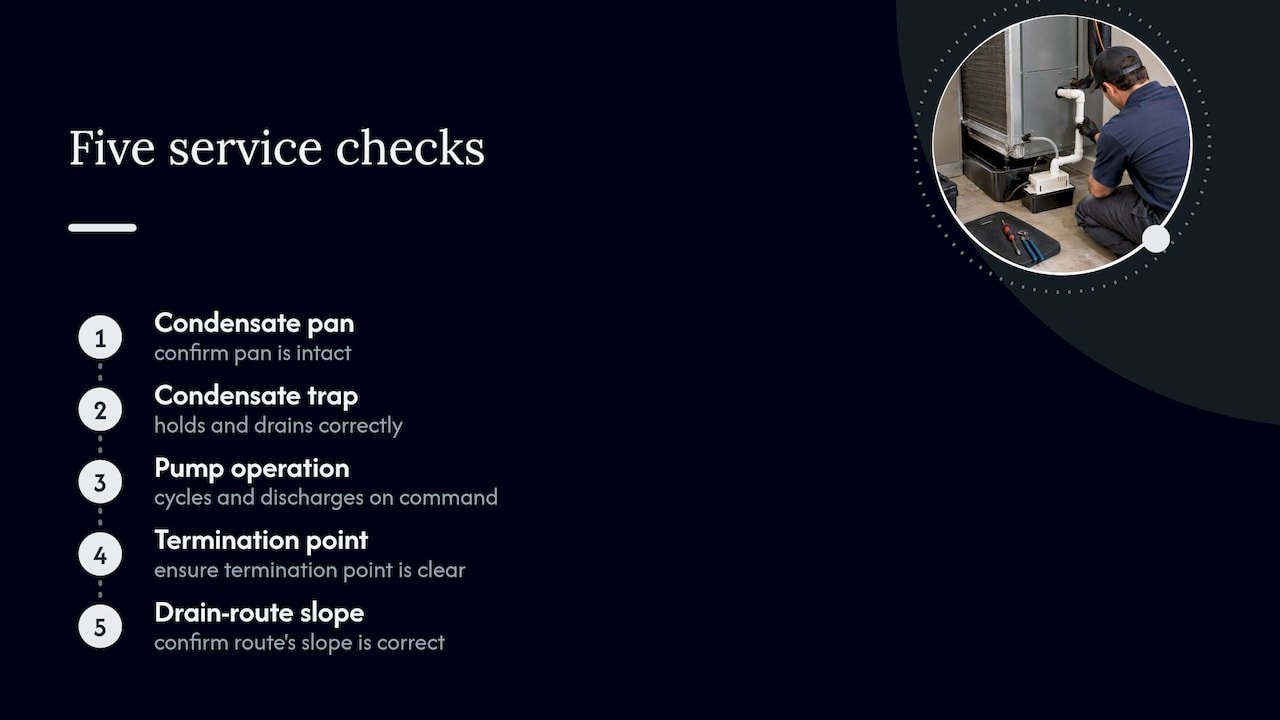
A documented quote should note the pan’s condition, the pump’s test result, and the route’s slope, giving you a record if the same symptom returns. That record also protects you if a water damage claim comes up later. Our blog on protecting your home from drain issues covers related steps in more detail.
Why the cheapest quote isn’t always the smartest one
The advice that circulates most often, just flush it with vinegar and move on, works fine for a light, early clog and fails everyone else. The real cost driver isn’t the cleaning itself; it’s whether anyone actually tested the pump and float switch before calling the job done. A $90 flush that skips those checks can leave a failing pump in place, and that pump will fail again within weeks.
Homeowners comparing quotes should weigh the scope, not just the number. A $150 quote that includes a pump discharge test and pan inspection is a better deal than a $90 quote that only wipes out the visible line. Prioritize the diagnosis first: once you know whether you’re dealing with a simple clog or a mechanical failure, the right price band becomes obvious, and so does whether DIY is even appropriate.
— MDTECH
Getting professional help from MDTech Services
If you would rather skip the guesswork and have a licensed technician confirm the diagnosis in one visit, a professional local service can handle condensate drain and HVAC service calls.

A standard condensate service visit typically includes:
- Inspection of the drain pan, trap, and full drain route for cracks, sagging, or blockages.
- A discharge test of the condensate pump and float switch to confirm it cycles correctly.
- Confirmation that the termination point drains freely and meets code where applicable.
- A written scope outlining what was checked, what was replaced, and any warranty on the work.
Hiring a licensed local technician helps ensure the pump installed is correctly matched to your system and the work complies with warranty standards. You can review our air conditioning repair services or book a visit directly through our site to get a firm quote for your situation.
Sources
- Maintenance Checklist | ENERGY STAR
- Moisture control guidance for building design, construction and maintenance | EPA
- How Much Does Drain Cleaning Cost? | HomeGuide
- How to clean AC drain line | Carrier
FAQ
How can you tell if a condensate drain is clogged?
Common signs include standing water in the drain pan, water stains near the unit, a musty smell, or the system shutting down because the float switch detected high water. ENERGY STAR lists these symptoms as reasons to inspect the drain during routine maintenance.
Is AC drain line cleaner worth buying?
A mild cleaner or distilled vinegar can help with light organic buildup near the line’s outlet, but it will not fix a failed pump, a cracked trap, or a sagging section of tubing. Carrier’s guidance separates simple cleaning from mechanical failures that need a technician.
Can a condensate line drain to the sewer?
In some setups a condensate line connects to an approved drain or sewer line, but this depends on local plumbing codes and the specific installation. EPA’s moisture control guidance notes that proper traps and backflow prevention matter wherever the line terminates, so check with a local professional before assuming your setup is compliant.
How do you unblock a condensate drain line yourself?
Turn off the system, then use a wet/dry vac at the line’s outdoor termination to pull out loose debris, followed by a flush with distilled vinegar or hot water. If the blockage doesn’t clear or returns quickly, that usually points to a trap or pump issue rather than a simple clog, and it’s time to call a technician.
What does professional condensate drain cleaning typically cost?
Most homeowners pay $75 to $250 for standard professional clearing, based on cost data from HomeGuide. Jobs that involve pump replacement or difficult access run higher, often into the several-hundred-dollar range.